

You are using an out of date browser. It may not display this or other websites correctly.
You should upgrade or use an alternative browser.
You should upgrade or use an alternative browser.

B
british_hempire
Guest
I dunno, some people should be ashamed of the way they act...
B
bigherb
Guest

jack hairy
Banned
im no one,
but please drop the bs.
this was an interesting thread to read.
lets keep it that way for others.
but please drop the bs.
this was an interesting thread to read.
lets keep it that way for others.

DANKIND
New member
im no one,
but please drop the bs.
this was an interesting thread to read.
lets keep it that way for others.
+1 lets stay civilized please gentlemen

H
hempy
Guest
The message you have entered is too short. Please lengthen your message to at least 10 characters.
Last edited:

deran
Member
Sam's timeline is this:
71 Returned from his travels
71 Haze Bros began with Mexican/Colombian
72-73 Thai and South Indian added to 'Original Haze'
76 Skunk #1 stabilised to point it was ready for release, Sacred Seeds started
So Sam's 'Original Haze' as created by the fictional or not 'Haze Bros' didn't exist before early 74.
Sam said the Haze bros quit growing Haze by the late 70s and grew Skunk #1 instead, he also said they had a falling out in the early 80s, one became born again and one went to Mexico.
Then there is that early 80s (82 I think) HT article with the pic of 'Haze Bros Kush'.
Skunk, according to Sam was originally a cross of an Acapulco Gold female to and f2 Afghan/Colombian male, then he worked it a lot of gens.
It probably is Acapulco x Afghan/Colombian, you can see a lot of Acapulco in it, particularly in the Seedsman version where there are phenos that go 13 weeks and are a dead ringer for a Acapulco/Oaxacan Gold type. Several people I know have grown an earlier less worked version and said there were roughly 40% Acapulco phenos, 40% Colombian phenos and 20% indica looking Afghan phenos. UK Cheese is probably a later more worked Skunk #1 pheno that is unusual because it still has the terpenodi profile from the Afghan, giving it a lot of stink.
But did Sam breed Skunk originally? There are people who tell a different tale and say Sacred Seeds was a loose Collective in the Bay Area communes and a group of 6 key breeder/growers developed Skunk and that Sam was only a peripheral member of that group and just took the Skunk line and worked it in his own direction which was to try to make it was sweet as possible and get rid of the nasty stinky side.
Who knows, it's said 2 of the original 6 are dead and the other 4 are MIA. A lot of time has passed since the early 70s and if the people who could really prove the truth wasn't Sam's version would have probably stood up before now but haven't because they either walked away from the scene a long time ago, got sent to prison for a long time or have other good reason not to, otherwise, Sam wouldn't have been able to take all the credit. Or maybe Sam is telling the truth?
sometimes the best lie is the truth ...
thats what has made me go hmmm .. and for sure we wont know, we can only judge the circumstanial evidence .... damn we r left with some plants .. all alone

too bad inet hasnt reached everybody yet ...
B
british_hempire
Guest
Panama red came from Afghanistan please you dont even know what a pan red looked like let alone smoked it to know its affect.
I can read the reports though...
DJ Short:
Colombian Red
Colombian Red was the near polar opposite of Colombian Gold. This lowland jungle pot (possibly from Brazil) was made up of dark red, almost black, chunky little nuggets of what appeared to be hash, stems, leaf and seed. The aroma was that of cedar and hash.
In the early 1980's, the Red cost only $30 to $60 an ounce due to its appearance, making it one of the best deals going. This pot was a narcotic, knock-you-down-and-out, super munchie, red-eye express. The joints would only burn half way before drowning in their own resin! The smoke was very expansive in the lungs with a powerful pine/hash flavor.
Before subjecting its victim to fits of gorging and deep snoozing, the experience usually included ridiculously long spasms of uncontrollable laughter. The silliest little image could induce hilarity beyond belief. This was the main herb around when the Cheech and Chong movies first came out.
The plants from the Red were among the first grown out by Americans. There were many seeds, medium-sized and dark grey, that sprouted and grew easily into a finished product that was more than adequate. The plants grew low, dark, and bushy, with uneven and somewhat scraggly branches that were easily broken from wind damage. The locally grown varieties rarely budded very much, so it is not certain when they would have finished. It would have been relatively late in November at the earliest.
Colombian Red was the near polar opposite of Colombian Gold.
Others said the same thing - Gold was uplifting, inspiring, creative and social, Red was narcotic.
chunky little nuggets
chunky nuggets on a pure sat? I think not, some indica in there at least...
This pot was a narcotic, knock-you-down-and-out, super munchie, red-eye express.
All indica qualities.
The joints would only burn half way before drowning in their own resin!
Sounds like a hashplant type to me...
The smoke was very expansive in the lungs
Something associated with indica
with a powerful pine/hash flavor
Indicas have high terpenoid densities hense they have strong flavours, many of them are hashy...
grew easily into a finished product that was more than adequate.
Grew well in Oregon (where DJ was at the time) can't say that about a tropical sativa...
The plants grew low, dark, and bushy,
Sounds like an indica.
Panama Red
From what I've gathered, Panama Red comes from any number of brash entrepreneurs who have damned the tides of oppression and grown copious amounts of primarily good old Colombian Red seeds in the wonderfully situated country of Panama, or any of her many isles.
Located a mere eight or nine degrees north of the equator, this tropical paradise has a coast on both the Pacific or the Caribbean Sea, without much distance between them, but a lot of elevation. The Panama Red that I am accustomed to was similar to the Colombian Red, but airier – not as compressed. It had a unique island flavor to it, with a spicy/sweet Sativa rush. Some called it the Tequila of herb, as it produced a high that greatly lowered inhibitions, creating a desire to consume more until it was too late!
For some drinkers, the Panama Red did not mix too well with alcohol, but for most it was a pleasant party high.
I did grow some seeds of Panama Red on more than one occasion. The plants were of the medium bushy character of the Colombian Red, with a little more hermaphroditism, and very long flower cycle (12 weeks indoor, late November outdoors). Unfortunately, however, this was at the same time that I was also growing the famed Highland Thai and new Afghan plants that were so unique, new and powerful, and the Panama Red became neglected.
very long flower cycle (12 weeks indoor,
12 weeks isn't very long. Last 3 pure Afghan heirlooms I've grown (Mazar-i-Sharif, Purple Afghan, Dark Kush) all went 70-80 days. By contrast, my Colombian Gold takes 16 weeks as a cutting, more from seed.
We know all about how the Afghans taken to Hawaii changed and became distinctively Hawaiian in only a few seasons, why is it so hard to believe that Afghans were grown in the Colombian Lowlands, soon adapted and became Colombian Red? We know they were growing Thai seeds in the Highlands in the 70s to produce that 'Sky Blue Blonde' so it's not unreasonable to believe the origins of Colombian Red are an imported indica type.
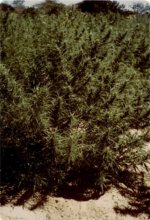
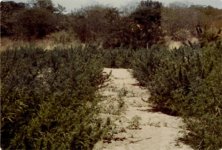
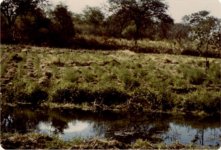
Indicas growing in NW Brazil near the Colombian border, 1982, from a Brazilian govt report on the use of IR surveillance to discover illegal marijuana planting:
Attachments
kashrocks
New member
Rob studied at Uindiana, Bred the Bubblegum,
May I ask you how you came to the conclusion that Clarke bred Bubblegum...
Thanks.
Peace.
K.

cannatari
New member
I would propose that THE HAZE we know does in fact go Back to some dude in the 60s growing big sur holy weed from purple mexican seed.
I'm with you there, coop. Big Sur is barely 40 miles from Santa Cruz. IMO, it's almost impossible for those genes to have not played a part in the Cali strains of old. Especially PH.
I've got a BSHW seedling going so look out for more on this in coming months.
SnowHigh's:

Peace.
B
british_hempire
Guest
There's a story about Bubblegum being bred outdoors in the early 70s, forget the name of the guy now.
Personally, I wouldn't be surprised if Bubblegum isn't just a pheno of an old Affi, one of a number that survive from the early indica imports, things like the Oregon Afghan, Pure/Puss Kush, Dabney Blue, Bubba Kush, LA Affi etc. In a lot of these cases I expect some guy who kept the cut for years eventually got credit for being the originator when really, the cut has been around but tightly held for a long time and may have only got out into general circulation after being hoarded many years.
Personally, I wouldn't be surprised if Bubblegum isn't just a pheno of an old Affi, one of a number that survive from the early indica imports, things like the Oregon Afghan, Pure/Puss Kush, Dabney Blue, Bubba Kush, LA Affi etc. In a lot of these cases I expect some guy who kept the cut for years eventually got credit for being the originator when really, the cut has been around but tightly held for a long time and may have only got out into general circulation after being hoarded many years.

joshuahazen
New member
I've smoked all kinds of grass from Big Sur. It is all wonderful stuff, some of the best I have tried, but it is nothing like haze.
The stuff I have grown from Big Sur, is lime green, early flowering, mostly sativa in leafshape and structure, but the buds look kind of indica somehow, and very, very sweet, like honey, or candy. The resin is gooey, like the buds seem wet even when they are bone dry, and the stems are crackin.
This is nothing like the Haze I have smoked. The haze I have smoked is dark green, late flowering, and not really sweet, with a very mild smell. Although some pheno's I have tried might be a bit sweet, nothing like Big Sur, which is the sweetest stuff I have ever tried, and it is very pungent. Haze is not gooey, and when it is dry, it feels dry, although it doesn't roll well in a joint and you have to cut it with scissors. The crystals and resin have an entirely different consistancy, in fact I could hardly think of two sativa doms that were more diametrically opposed to one another than Big Sur and Haze.
None of the cats I know from Big Sur ever heard of the Haze Brothers,
But you never know, I suppose anything is possible, right?
Last edited:
B
british_hempire
Guest
I'm with you there, coop. Big Sur is barely 40 miles from Santa Cruz. IMO, it's almost impossible for those genes to have not played a part in the Cali strains of old. Especially PH.
I've got a BSHW seedling going so look out for more on this in coming months.
SnowHigh's:
Peace.
If you do some googling you'll find a chapter of an old book that says that BSHW was bred in 1964 by a Buddhist monk called Perry living in a famous monastery near Big Sur. It's supposedly Zacatecas Purple crossed to a sweet kush type indica.
The high remote valley that the ZP came from was eradicated and thoroughly sprayed with paraquat so the strain is gone. There was a newspaper story a few years ago about the indians there trying to restart MJ production using seed picked out of bags of weed they scored in the big towns and not getting very far due to the low quality of the seedstock.
I see no reason to link BSHW to Haze other than they both come from Cali in the 1960s. There were literally dozens upon dozens of great varieties of Mexican and Cali had it's own domestic Mexican marijuana from 1915 onwards. When Pancho Villa kicked off the revolution that year a huge flood of refugees headed north to Cali and settled there, they were mostly agricultural workers and they drove the expansion of the wine and fruit industries in the 1920s. So if you wanted Mexican in Cali you didn't have to look hard I expect.
Also, the surfers drove down the Pacific coast of Mexico in pretty huge numbers from the mid 50s onwards, it was very undeveloped at that time and the Sierra Madre mtns run down the Pacific coast of Mexico like a spine so all the surf hotspots are literally sat at the foot of the mountains that were covered in marijuana fields. Watch the movie Acapulco Gold, it gives you some idea of how it worked. The Sierra Madres was home to varieties like Michoacan Brown and Oaxacan/Acapulco Gold among others so we know for sure that there was a direct link between that genepool and California from early on. Sonora, just over the border from the US is where the legendary desert grass that the Yaqui Indians who fought for Pancho Villa grew and that was said to be absolute loco weed, incredibly powerful.
Probably a mish-mash of genes went into Haze and probably the guys who made it didn't even know what they were, probably just the best plants from the seeds picked out of the best shit they had smoked to that point, probably they added more genes each season as they grew out the best seeds they'd found. If I think back to how I started growing, I planted the seeds I'd saved out of bags of weed I'd bought over a few months beforehand, that was how everyone did it before Nev came along.
B
british_hempire
Guest
you guys need to differentiate indica and afganica. One being a broad leaf more sativa from india, the other being the broadleaf hashplant.
Both types are grown in Afghanistan. The native landraces of Afghanistan are quite tall and long flowering with fairly thin leaves, the classic short, fat, squat hashplant is either a lowland landrace or a lowland cultivar developed by man. I suspect the latter.
cannatari
New member
The BSHW is supposedly a Sativa(ZP/ZPcross?) x Afghani (Holy Weed). Snow has a broad leaf indica pheno of BSHW as well. His example is the most extreme expression from sisters I have ever seen and it's such an old line. It's pheno's are all over the place and so are the SAGE pheno's.
The bud that I got my seed from was also sugary sweet like you said, Josh. Maybe the Afghani contributes to that.
I only mean to say that BSHW and Haze may share a close and common ancestor. IMO, the timeline, the distance, the phenos and the accounts make BSHW a good example in the research of California Haze.
Peace.
EDIT, I was typing this post while you were posting your post, BH. I've heard that story about Perry and the surfers but not about the loco. Good stuff.
Last edited:
davesnothere
New member
Yeah you are right on about some of the real afghans not all being stocky with fat leaves. Last season I grew a pack of Real Seed Company's afghani outdoors and most were much taller and had skinny leaves just like you said. And a longer flower period than you would think with afghani.Both types are grown in Afghanistan. The native landraces of Afghanistan are quite tall and long flowering with fairly thin leaves, the classic short, fat, squat hashplant is either a lowland landrace or a lowland cultivar developed by man. I suspect the latter.
Do you think some of those taller afghani's have some sativa in there? Or do they just grow taller for some reason, the higher in elevation?
C
cheesefucker
Guest
When did all these names first come into play does anyone know. When I read about the history of cannabis the old timers used to call weed Acapulco Gold or Panama Red, or Indica or Sativa. When did the breeders first start to give their genetics funky names ?.
J
JessE
Guest
Coop,research, if you did some mabye you would be asking ROB how he bred the haze.
Journalism would be proposing that Rob studied at Uindiana, Bred the Bubblegum, Went Back to Santa Cruz, worked on haze and skunk.
The rest is kinda history.
I can assure you that hempy knows far mare about Haze, and cannabis in general than you do. So lets stop the BS, because you're not fooling anyone that you're some kind of haze expert. Ive watched you march around this forum, pretend you're going to educate someone who knows far more about Haze than you do and order people around long enough.
The haze question has been debated, extensively at this forum, for many years in many different threads. You were never apart of any of those discussions, and you're clearly in need of a reality check.
You are attempting to give yourself journalism skills, but with what credibility? You're blowing smoke up peoples asses with your bubble gum theories, presented as fact, you were attempting to theorize a 75% haze variety could be grown in NY...its really absurd.
My suggest is to sit back and learn from those who know, instead of pretending to be an expert on the forum.
More theory, with what evidence to support your conclusions? Yourself and others who present these wild idea's, without a shred of evidence to support it, are exactly why this thread was created in the first place. There are a dozen stories surrounding Haze, and it looks like we can add a few more to the list by the time you guys are finished.now GOOGLE will show you arguing this going back years. But here are some facts. With the rest of your stories with facts. I would propose that THE HAZE we know does in fact go Back to some dude in the 60s growing big sur holy weed from purple mexican seed. With Nevil's ideas it is most likely crossed with some great Thai, which i assume came via Hawaii.
Stick to the facts, from credible sources. If you want to theorize, start your own thread. But please make sure you write your theories as such, and not cross the threshold of presenting your thoughts as fact!
you guys can continue arguing about big herb in Nevil's Haze in the city, and continue to fool the people about the real questions, like how is Hortapharm/Gw pharm want to control the genetic code in cannabis as plant patents. You can worry about that shit.
So we have a few different angles you're working here, you're disrespecting Shanti and my research on the subject of genetic patents and attempting to paint Hempy and others as pulling the wool over everyones eyes.
 Laughable considering how much theory you're throwing into your writings in this thread.
B
british_hempire
Guest
Yeah you are right on about some of the real afghans not all being stocky with fat leaves. Last season I grew a pack of Real Seed Company's afghani outdoors and most were much taller and had skinny leaves just like you said. And a longer flower period than you would think with afghani.
Do you think some of those taller afghani's have some sativa in there? Or do they just grow taller for some reason, the higher in elevation?
I think those taller afghanis are adapted to the conditions they are native to. Vavilov studied and wrote about them as did RCC. They are found (when not cultivated) at higher elevations between the lower, cultivated areas and the snowline. I'm confused on the whole indica/sativa classification thing.
My experience with landrace Afghanis has led me to believe that they are capable of spitting out a wide variety of types and with several gens of selection you could isolate a number of quite distinct types so when people talk of Afghanis there is a lot of different types and traits they could be referring to.
The short, squat, broadleafed classical hashplant we used to think of as the archetypal Afghani indica is what they used to cultivate in the lowlands prior to the Soviet invasion. Examples of these include things like Deep Chunk, Afghani #1, Petrolia Headstash, some of the stuff Nev had like the NLs etc.
I am not sure what these are, they could be native lowland types but I suspect they are the result of man's selection for resin production over hundreds of years. Maybe they began with the native landraces that Vavilov wrote about and isolated the hashlant type, I could believe that with years of selection you could isolate a hashplant type from something like the RSC Mazar-i-Sharif. Alternatively, the squat, broaf-leaved indica type is said to originate in China and could have travelled down the Silk Road to Afghanistan and that is the origins of the lowland Afghani hashplants. The Chinese types may have been low potency and were crossbred with the native types for potency and resin production.
Someone will have to gene profile the remaining landraces and cultivars before we can really know what begat what and what is related to what.
The highland types are often used for hand rubbing, I expect this is how hash was first produced in Afghanistan, this is probably how all hash was made in the early times. The techniques and silk materials needed to make sifted hash would have come from China at some time in the distant past. The lowland hashplant cultivars are developed for sifting so I expect their development happened gradually over a period of time after silk for screening and the knowledge to do so arrived. I doubt the original highland landraces were all that good for sift production, certainly not compared to the hashplants, we all know how resinous and more importantly, how easily the resin heads seperate with most of the classic indica types such as Deep Chunk and NL5. I know from experience that the landrace Afghans are very different in that regard - they have smaller, less easy to detach resin and most of them have much less resin coverage, in fact, a lot of them would be said to lack resin by modern standards. When max yield in weight of resin that can be extracted by sifting is the end goal (and it was in Afghanistan for centuries) then I would muxh rather grow a field of hashplant type lowland Afghans than I would highland landrace Afghans, at a guess, I would way the hashplants would yield 3x as much in sifted resin, 2x at the very least.