
You are using an out of date browser. It may not display this or other websites correctly.
You should upgrade or use an alternative browser.
You should upgrade or use an alternative browser.
NEW RULES- Open photo assignment- Share your favorite random pics
- Thread starter Deach69
- Start date





longball
Well-known member
Allman Brothers Band at 'Mountain Jam', Hunter Mountain NY, May 31, 2009

Guitars and Percussion

Greg Allman - the chubby guy on stage to the left of Greg(in the pic) is Brian Farmer, Warren's longtime guitar tech. Brain looked a bit like Warren and they were often mistaken for each other. They also shared the same birthday. Sadly, Brian passed in 2014.

Allman Brothers Band, Grateful Dead, Fleetwood Mac, Fillmore East, New York City, February 11, 1970
1st row - Mick Fleetwood, Peter Green, Pigpen, Bob Weir, Danny Kirnan
2nd row - Jerry Garcia, Bill Kreutzman, Berry Oakley, Mickey Hart, Butch Trucks, Duane Allman, Greg Allman

Guitars and Percussion
Greg Allman - the chubby guy on stage to the left of Greg(in the pic) is Brian Farmer, Warren's longtime guitar tech. Brain looked a bit like Warren and they were often mistaken for each other. They also shared the same birthday. Sadly, Brian passed in 2014.
Allman Brothers Band, Grateful Dead, Fleetwood Mac, Fillmore East, New York City, February 11, 1970
1st row - Mick Fleetwood, Peter Green, Pigpen, Bob Weir, Danny Kirnan
2nd row - Jerry Garcia, Bill Kreutzman, Berry Oakley, Mickey Hart, Butch Trucks, Duane Allman, Greg Allman
longball
Well-known member
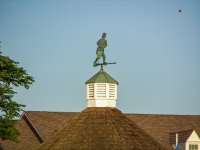
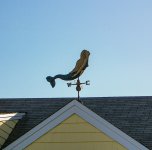
Weather Vanes of the Great Northeast


Bonus
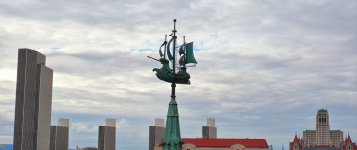
Replica of Henry Hudson's ship 'Half Moon' which he used to find a secret passage from the Atlantic Ocean to the Pacific Ocean in 1609. He sailed up what is now called the Hudson River. At a location now called Albany the river changes from salt water to fresh water. Hudson knew this was no passage to the Pacific Ocean.
The area was settled by Dutch colonists, who built Fort Nassau in 1614 for fur trading and Fort Orange in 1624. In 1664, the English took over the Dutch settlements, renaming the city Albany in honor of the Scottish title of the Duke of York (later James II of England and Ireland and James VII of Scotland): the Duke of Albany. The city was officially chartered in 1686 under English rule. It became the capital of New York in 1797 after the formation of the United States. Albany is the oldest surviving settlement of the original British Thirteen Colonies north of Virginia. Albany is the second oldest charted city in America. (St. Augustine, Florida is the oldest)
In 1915 the "De Halve Maen" (The Half Moon) weathervane was placed on top of the D&H Building (now SUNY Plaza). While it looks small from the ground, it weighs in at over 200 pounds and measures at 8'8" high, 6'6" long, and 2'6" wide. Coverage in The Argus newspaper noted "The great height, and the lack of space on top of the tower of the D & H building made the work very dangerous for the men raising the vane, but the ornament was placed in remarkably swift time."
Bonus
Replica of Henry Hudson's ship 'Half Moon' which he used to find a secret passage from the Atlantic Ocean to the Pacific Ocean in 1609. He sailed up what is now called the Hudson River. At a location now called Albany the river changes from salt water to fresh water. Hudson knew this was no passage to the Pacific Ocean.
The area was settled by Dutch colonists, who built Fort Nassau in 1614 for fur trading and Fort Orange in 1624. In 1664, the English took over the Dutch settlements, renaming the city Albany in honor of the Scottish title of the Duke of York (later James II of England and Ireland and James VII of Scotland): the Duke of Albany. The city was officially chartered in 1686 under English rule. It became the capital of New York in 1797 after the formation of the United States. Albany is the oldest surviving settlement of the original British Thirteen Colonies north of Virginia. Albany is the second oldest charted city in America. (St. Augustine, Florida is the oldest)
In 1915 the "De Halve Maen" (The Half Moon) weathervane was placed on top of the D&H Building (now SUNY Plaza). While it looks small from the ground, it weighs in at over 200 pounds and measures at 8'8" high, 6'6" long, and 2'6" wide. Coverage in The Argus newspaper noted "The great height, and the lack of space on top of the tower of the D & H building made the work very dangerous for the men raising the vane, but the ornament was placed in remarkably swift time."

Wobby
Well-known member
Is the first one in honour of guerrilla growers watering their crops or a drummer?Weather Vanes of the Great Northeast
View attachment 107691
View attachment 107692
View attachment 107693
View attachment 107694
Bonus
Replica of Henry Hudson's ship 'Half Moon' which he used to find a secret passage from the Atlantic Ocean to the Pacific Ocean in 1609. He sailed up what is now called the Hudson River. At a location now called Albany the river changes from salt water to fresh water. Hudson knew this was no passage to the Pacific Ocean.
The area was settled by Dutch colonists, who built Fort Nassau in 1614 for fur trading and Fort Orange in 1624. In 1664, the English took over the Dutch settlements, renaming the city Albany in honor of the Scottish title of the Duke of York (later James II of England and Ireland and James VII of Scotland): the Duke of Albany. The city was officially chartered in 1686 under English rule. It became the capital of New York in 1797 after the formation of the United States. Albany is the oldest surviving settlement of the original British Thirteen Colonies north of Virginia. Albany is the second oldest charted city in America. (St. Augustine, Florida is the oldest)
In 1915 the "De Halve Maen" (The Half Moon) weathervane was placed on top of the D&H Building (now SUNY Plaza). While it looks small from the ground, it weighs in at over 200 pounds and measures at 8'8" high, 6'6" long, and 2'6" wide. Coverage in The Argus newspaper noted "The great height, and the lack of space on top of the tower of the D & H building made the work very dangerous for the men raising the vane, but the ornament was placed in remarkably swift time."
View attachment 107695
longball
Well-known member
Is the first one in honour of guerrilla growers watering their crops or a drummer?
Yes, a watering can.

Hemp was a vital and major staple crop in colonial America. Its cultivation was essential for both economic stability and national security, and in some colonies, farmers were legally required to grow it. At least three early U.S. presidents—George Washington, Thomas Jefferson, and James Madison—grew hemp.
Hemp harvest at Mt. Vernon( GW's home) 1774.



charlesufarley
Well-known member
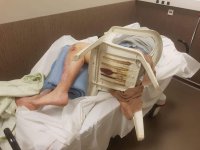
The last of the orb weavers for the year



lozac123
Well-known member
and thats enough internet for today
longball
Well-known member
MR. NICE SEEDS
HAWAIIAN SPICE
This was the hardest plant I ever had to 'dial-in'. This was a challenging year as I was growing strains I'd never grown before by 3 different breeders. All plants were at least 50% Haze. You can be sure that they all wanted something different. Of course every year is a challenge as I always grow a few strains I've never grown before and as a outdoor grower I have absolutely no control over any part of the environment or animals lol
Chop day for this one. My helper didn't think it would ever finish. Not finish? In this growers paradise? Hard to figure flower time outdoors as there is no 12/12 light switch. Mid-August(?) to December 10th must be around 17 weeks!
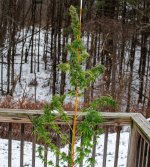
The buds get any heavier and they will start breaking the branches!
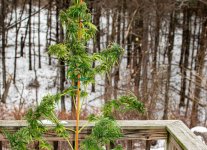

HAWAIIAN SPICE
This was the hardest plant I ever had to 'dial-in'. This was a challenging year as I was growing strains I'd never grown before by 3 different breeders. All plants were at least 50% Haze. You can be sure that they all wanted something different. Of course every year is a challenge as I always grow a few strains I've never grown before and as a outdoor grower I have absolutely no control over any part of the environment or animals lol
Chop day for this one. My helper didn't think it would ever finish. Not finish? In this growers paradise? Hard to figure flower time outdoors as there is no 12/12 light switch. Mid-August(?) to December 10th must be around 17 weeks!
The buds get any heavier and they will start breaking the branches!


 shes looks

Mr. Brown
‘24, ‘25 COE Winner
Great job @longballMR. NICE SEEDS
HAWAIIAN SPICE
This was the hardest plant I ever had to 'dial-in'. This was a challenging year as I was growing strains I'd never grown before by 3 different breeders. All plants were at least 50% Haze. You can be sure that they all wanted something different. Of course every year is a challenge as I always grow a few strains I've never grown before and as a outdoor grower I have absolutely no control over any part of the environment or animals lol
Chop day for this one. My helper didn't think it would ever finish. Not finish? In this growers paradise? Hard to figure flower time outdoors as there is no 12/12 light switch. Mid-August(?) to December 10th must be around 17 weeks!
View attachment 107974
The buds get any heavier and they will start breaking the branches!
View attachment 107975
View attachment 107976

She is a real beauty
 Like the description says 'Spice is a plant that would win a beauty show if it wore a bikini ...'
Can't wait to see her hanging heads down in your basement

MB
longball
Well-known member
The backdrop of snow must make it doubly hard to get any heat units out of the sun as well to finish her! It looks awesome well done! Hawaiian anything in the snow amazing!
Thank you, Fish!
I don't think she cared much for Beautiful Upstate New York lol
longball
Well-known member
Thank you, eazyzn!
She does look like fire! I'll let her cure until April and then give her a taste!

