Breeding con la Calabrese Rossa

Rhizome

Active member
Ciao a tutti.

Da un po' lavoro su questo progetto.
Usare un maschio di Shantibaba con una femmina di calabrese rossa ( erba del diavolo, terronica, ionica o come la si voglia chiamare).

Solamente cercando e testando al momento tutto quello che trovo o amici mi mandano.

Molto difficile lavorare su qualcosa che non si conosce molto bene e che probabilmente ( per come era e lo ricordavamo) non esiste più.

Comunque...questo tutto quello che sono riuscito a metter insieme.

La storia dovrebbe incominciare nel 1931.
Non sono ancora molto convinto come sia successo ma dall'India L'orto botanico di Napoli ha tratto un ceppo di indica chiamato "il ceppo di Calcutta" per ricerche scientifiche dentro il centro.
Gli studi, inclusi interessanti analisi sul tasso di THC e intensità luminosa sono stati ampiamente pubblicati ( Giuliano e Siniscalco tra altri). Gli studi sul ceppo di Calcutta arrivano fino a al 2010.

Ma la storia della calabrese rossa nasce solo in un secondo momento e in qualche modo accidentalmente.

Solo negli anni '60 con "Pascalone e' Nola" tutto cambia.
Boss del Nolano, articolazione tra il napoletano e il casertano....Pasquale Simonetti controlla tutto il mercsto ortofrutticolo della zona, incluso traffico di sigarette di contrabbando.
A Pasquale piace fumare e piace mangiare:)

Non so bene ancora cosa esattamente sia successo. Forse qualcuno ha pensato di offrire a Pasquale un "omaggio" unico e molto speciale ( semi di indica, quando in Italia si fumava o conosceva solo la sativa).
Forse Pasquale ha scoperto che a Napoli si conservavano semi di cannabis.

Comunque la storia ufficiale é quella di un furto dai laboratori dell'orto botanico di Napoli semi del ceppo di Calcutta ( che era diviso se non sbaglio in 3 o 4 tipi per studi).

Tra gli anni -'70 incomincia a circolare nel Avellinese e Napoletano (Vesuvio) una varietà chiamata " la nana avellinese" o " la nana napoletana".
Una piccola paffuta pianta, che fioriva molto più velocemente delle altre, con effetti molto forti e sedativi.

In questa storia non c'è breeding, ma selezione naturale.
I semi trafugati sono stati coltivati, le piante si sono impollinate e per decadi la pianta é stata passata e cresciuta in questo modo, hybridizzandosi con le sative locali, tra se stessa e soggetta a selezione dei coltivatori ( che selezionavano come facevano con i pomodori).

Negli anni '70 casualmente la camorra non coglie le possibilità imprenditoriali, che invece la andrangheta considererà una grande opportunità.

Anche la Calabria non arriva a creare la calabrese rossa, ma come per il napoletano la pianta arriva per semi fumati, cresciuta e open pollination.
Si sviluppano così 3 tipi:
Il tirreno
Lo ionico
Lo strain Di Reggio calabria ( quello dell'Aspromonte)

Il resto é leggenda.
 
GOOGLE TRANS. OF THE ABOVE:

Hi everyone.

I've been working on this project for a while.
Use a male Shantibaba with a female red Calabrian (devil's weed, terronic, ionic or whatever you want to call it).

Just searching and testing at the moment everything I find or friends send me.

Very difficult to work on something that you don't know very well and that probably (as it was and as we remembered it) no longer exists.

Anyway...this is all I could put together.

The story should begin in 1931.
I'm still not very sure how it happened but from India the Naples botanical garden took a strain of indica called "the Calcutta strain" for scientific research within the center.
The studies, including interesting analyzes on THC levels and light intensity, have been widely published (Giuliano and Siniscalco among others). Studies on the Calcutta strain date back to 2010.

But the story of the red Calabrian was born only at a later time and somewhat accidentally.

Only in the 1960s with "Pascalone e' Nola" did everything change.
Boss of the Nolano, a junction between the Neapolitan and the Caserta areas....Pasquale Simonetti controls the entire fruit and vegetable market in the area, including trafficking in contraband cigarettes.
Pasquale likes to smoke and likes to eat

I still don't know exactly what happened. Perhaps someone thought of offering Pasquale a unique and very special "homage" (indica seeds, when in Italy people only smoked or knew sativa).
Perhaps Pasquale discovered that cannabis seeds were stored in Naples.

However, the official story is that of a theft from the laboratories of the botanical garden of Naples seeds of the Calcutta strain (which if I'm not mistaken was divided into 3 or 4 types for studies).

Between the 1970s, a variety called "the Avellinese dwarf" or "the Neapolitan dwarf" began to circulate in the Avellino and Neapolitan areas (Vesuvius).
A plump little plant, which flowered much faster than the others, with very strong and sedative effects.

In this story there is no breeding, but natural selection.
The stolen seeds were cultivated, the plants were pollinated and for decades the plant was passed and grown in this way, hybridizing with local sativas, among itself and subject to selection by the growers (who selected as they did with tomatoes) .

In the 70s the Camorra coincidentally did not seize the entrepreneurial possibilities, which the Andrangheta instead considered a great opportunity.

Even Calabria does not manage to create the red Calabrian, but as for the Neapolitan the plant arrives through smoked seeds, grown and open pollination.
Thus, 3 types develop:
The Tyrrhenian
The ionic
The Reggio Calabria strain (that of Aspromonte)

The rest is legend.

 
Only in the 1960s with "Pascalone e' Nola" did everything change.
Boss of the Nolano, a junction between the Neapolitan and the Caserta areas....Pasquale Simonetti...

The rest is legend.


Pasquale Simonetti (Italian pronunciation: [paˈskwaːle simoˈnetti]; 26 February 1926 – 16 July 1955), known as Pascalone 'e Nola

Not sure how giving legendary seeds to a man who has been dead for years helps? :unsure:

 
Pasquale Simonetti (Italian pronunciation: [paˈskwaːle simoˈnetti]; 26 February 1926 – 16 July 1955), known as Pascalone 'e Nola

Not sure how giving legendary seeds to a man who has been dead for years helps? :unsure:

Many thanks for the comment!!!!

The thief of the strain is mentioned after the second world war ( I guess between 1945 and 1950?)... The change happened somewhere in the '60.....

Please don't give credit to all the text, is the bits that I collected until now and I am sure more I will discover and for sure discover wrong ( and In that respect probably a note should be done).
Simonetti and the family controlled the area where in the late '60 the dwarf version start circulating.( There again, at least one area where I could find the strain mentioned)...my assumption is that due to the area ( rural not urban) is more possible that him ( or some other....the official new is those of a thief after the second world war...I doubt this could happen without any crime organisation involved)
Simonetti also was the only boss who controlled all the fruit and vegetables market on the area, both production and distribution. And the control of cigarettes.

After the '55....but in general after the thief ....i guess all are assumptions.

I recently found ( hoping to have them) some grower from that specific area, claiming to have still crossed of the original gentics.
He claim the Calabrese rossa Is an Afghan plant ( as the onda calabra auto by Zoe seeds....NL XL x sila ruderalis there is little calabrese on it ) and the base of the crosses in Calabria.

The Calcutta strain is definitely recorded in several studies and the only indica arrived in Italy. Afghan strain won't arrive in Italy before '70-'80 and from Netherland...so the legend of the Calabrese rossa Is pre-holland.

Help me to investigate if you have time:)
 
GOOGLE TRANS. OF THE ABOVE:

Hi everyone.

I've been working on this project for a while.
Use a male Shantibaba with a female red Calabrian (devil's weed, terronic, ionic or whatever you want to call it).

Just searching and testing at the moment everything I find or friends send me.

Very difficult to work on something that you don't know very well and that probably (as it was and as we remembered it) no longer exists.

Anyway...this is all I could put together.

The story should begin in 1931.
I'm still not very sure how it happened but from India the Naples botanical garden took a strain of indica called "the Calcutta strain" for scientific research within the center.
The studies, including interesting analyzes on THC levels and light intensity, have been widely published (Giuliano and Siniscalco among others). Studies on the Calcutta strain date back to 2010.

But the story of the red Calabrian was born only at a later time and somewhat accidentally.

Only in the 1960s with "Pascalone e' Nola" did everything change.
Boss of the Nolano, a junction between the Neapolitan and the Caserta areas....Pasquale Simonetti controls the entire fruit and vegetable market in the area, including trafficking in contraband cigarettes.
Pasquale likes to smoke and likes to eat

I still don't know exactly what happened. Perhaps someone thought of offering Pasquale a unique and very special "homage" (indica seeds, when in Italy people only smoked or knew sativa).
Perhaps Pasquale discovered that cannabis seeds were stored in Naples.

However, the official story is that of a theft from the laboratories of the botanical garden of Naples seeds of the Calcutta strain (which if I'm not mistaken was divided into 3 or 4 types for studies).

Between the 1970s, a variety called "the Avellinese dwarf" or "the Neapolitan dwarf" began to circulate in the Avellino and Neapolitan areas (Vesuvius).
A plump little plant, which flowered much faster than the others, with very strong and sedative effects.

In this story there is no breeding, but natural selection.
The stolen seeds were cultivated, the plants were pollinated and for decades the plant was passed and grown in this way, hybridizing with local sativas, among itself and subject to selection by the growers (who selected as they did with tomatoes) .

In the 70s the Camorra coincidentally did not seize the entrepreneurial possibilities, which the Andrangheta instead considered a great opportunity.

Even Calabria does not manage to create the red Calabrian, but as for the Neapolitan the plant arrives through smoked seeds, grown and open pollination.
Thus, 3 types develop:
The Tyrrhenian
The ionic
The Reggio Calabria strain (that of Aspromonte)

The rest is legend.

Many thanks to translate....
I posted in Italian thinking to find someone to exchange info from local sources ( if any).
 
He claim the Calabrese rossa Is an Afghan plant ( as the onda calabra auto by Zoe seeds....NL XL x sila ruderalis there is little calabrese on it ) and the base of the crosses in Calabria.

The Calcutta strain is definitely recorded in several studies and the only indica arrived in Italy. Afghan strain won't arrive in Italy before '70-'80 and from Netherland...so the legend of the Calabrese rossa Is pre-holland.

Help me to investigate if you have time:)

Hi Rhizome! :)

I suspect that Zoe Seeds 'Onda Calabra Autoflowers' are simply a marketing ploy to separate a person from their money.

Like most legend stories, there are some facts. For example, Hemp pollen has been found in southern Italy as far back as 4,500B.C. Not just a one shot deal but continuously up to today. There is much documentation of the Roman Empire raising Hemp in Italy for centuries.

Pasquale Simonetti ( 26 February 1926 – 16 July 1955), known as Pascalone 'e Nola ("big Pasquale from Nola"), was an Italian criminal of the Camorra, a Mafia-type organisation in Naples and Campania in Italy. His murder and, more specifically, the revenge killing by his widow Pupetta Maresca(d. 2021) of the man who ordered the murder, made headlines internationally and inspired a film, La sfida (The Challenge), by the acclaimed Italian movie director Francesco Rosi. Pasquale Simonetti died age 29. He could not have been given seeds in the 60's as he had been dead for years. However, legendary stories often have some mix up in the timelines.

It is also true that there was some cannabis research at the Botanical Garden of Naples with research done by botanist, Biagio Longo.

"The main setback for the spread of medical cannabis in Italy was that, while by the end of the 19th century its use in clinical practice was well established in several parts of the world, the popular Indian variety was difficult to find in the Italian market.In fact, the first experiences and studies in Italy regarding the cultivation of cannabis indica plants only took place in 1931 at the Experimental Facility for Medicinal Plants in Naples, under the direction of botanist Biagio Longo, the then prefect of the Botanical Garden of Naples. Therefore, given the general unavailability of cannabis indica at the time of his studies, Dr. Valieri tested the medical properties of several Italian varieties found in Casoria noting that, while the effects were the same as the ones experienced with cannabis indica, they required a doubling of the previously prescribed dose."

Here is where we run out of established facts and the legend begins. I suspect if there is any such strain as Red Calabrese around, then the only way to get it would be to have some very strong local connections. Being married to the Boss's daughter is always a good one. Being the Boss's son best friend is also good.

I hope you succeed in your search for the legendary Red Calabrese! :)

Longball
 
Last edited:
Hey ciao! Molto interessante, ho sempre sentito parlare della famosa "Calabrese Rossa" ma non sapevo niente delle sue origini. Se scopri qualcosa diccelo, sono molto curioso!
Grazie
 
Si certo,molto famosa in calabria,é chiamata cima rossa.
Tutt'ora cresce in calabria Ed é la piu famosa erba che puoi trovare sul posto!
 
Hello everyone,

It’s been more than a year since I opened this thread, and during this time I’ve been continuously investigating this topic.
I have a parallel thread on another webpage where I’m collecting all the information I’ve found so far, and I would now like to share it here as well.

The information may not be fully accurate, although it is based on real events. It might not exactly match what we expect or believe, but I hope it will still be interesting, spark some discussion, and perhaps bring back some memories.

I will start by copying the posts from the original thread — hopefully it won’t take me too long to transfer everything.

@shantibaba I hope you don’t mind me mentioning you here for two reasons:
First, I had already asked previously, but in case you remember anything related to this strain or what happened in Italy, your input would be greatly appreciated.
Second, since the "Australian option" seems to be somehow linked to your early years, I was wondering if you might also have any memories or stories to share about that.

Thanks everyone for reading — I’m looking forward to the discussion!
 
Hello every one,

This is a story which I would like to share with you.

It is a research ongoing from few years now. The story has several events that can be documented and others that are only legend. There is lot to search….these are just notes, please keep them as such.


Probably for all of you the strain Calabrese Rossa in unknown, but during the late ‘60-‘70-‘80 this variety has been an unique type very well know to be incredible strong, to the point that people thought was hallucinogen ( and from there some use to call it Devil’s Herb which is a synonym for stramonium).

Wrongly for decade we thought this was a specific strain, but with time it results that the strain is more a process than a result and although having some origin link, several ( three at least ) varieties and genotypes have adapted to a specific territory and become a well known legend.


La Calabrese Rossa

( linked with Calcutta strain, called Erba del Diavolo, linked with Avellinese Nana, Napoletana Nana, Terronica)


Chapter 3:

Seed Sovereignty and genetic preservation


Seed sovereignty is the fundamental right of herbalist and communities to save, exchange, and develop seeds, ensuring control over their auto-production systems. In today's rapidly changing cannabis landscape, preserving the genetic diversity of specific strains is paramount. Genetic preservation not only safeguards biodiversity but also maintains resilience in the face of environmental challenges and ensures access to unique traits essential for adaptation and innovation. By championing seed sovereignty and genetic preservation, we honor our herbalist heritage, empower our local community, and secure a sustainable future for strains to come.


Genetic preservation is vital for maintaining the diversity of plant species and ensuring the resilience of a genetic pool. Each seed variety carries unique genetic traits honed over generations, offering resilience to pests, diseases, and environmental stressors. Preserving these genetic resources is akin to safeguarding a library of potential solutions for future challenges. Furthermore, genetic diversity provides the raw material for breeding programs to develop new crop varieties better suited to evolving conditions. Without genetic preservation, we risk losing invaluable traits essential for adapting to changing. It's a critical investment in the resilience and sustainability of our systems.


Chapter 0: Always a beginning is only the middle of another story that need a proper time.


Chapter 1:

The Calcutta strain


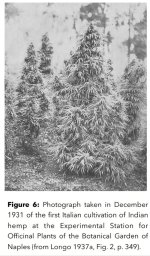
This story start on the 1931, when the Orto Botanico of Naples introduced cannabis seed of Indica from India into the experimental station in the botanical garden.


The Neapolitan contribution to the scientific studies on Cannabis. A historical overview By Giorgio Samorini


[…] The creation of the Experimental Station for Officinal Plants in 1928 was part of the directives aimed at the autarchic policies of the fascist regime, and the study of the acclimatization of exotic medicinal plants for their indigenous production had become e v e n more ne c e s s a ry, mindful the consequences of the First World War, which had seen the impossibility of their supply from abroad due to the interruption of relations with the Central Powers, the closure of the two ports of Hamburg and Trieste, and the foreclosure of the Balkan and Russia trade routes . During the years 1929-1948, up to 150 different species of medicinal plants were cultivated in the Station, which were studied for the production of strains with a high yield of active ingredients and for the production of seeds which were sent to the botanical and agronomic institutes from all over Italy. Among the most studied species were Indian hemp and the opium poppy.


In 1931, having received Cannabis indica seeds directly from Calcutta, Biagio Longo ( Director of the Botanical Garden) began cultivating them at the Experimental Station. To his surprise, all 200 seeds placed in cultivation in March germinated after 17 days. The culture produced 152 dioecious plants (134 females and 17 males) and 60 monoecious plants. The plants flowered in the second half of September, and initially Longo believed that this had been caused by late sowing, but with the cultivations of the following years he found that September flowering was the norm and was independent of the sowing period.


Although lush plants had been obtained in this first cultivation, Longo reported that they were inactive from a pharmacological point of view, while those of the second year (and all subsequent ones) were powerfully active. This followed in vivo experiments developed first, in 1933, by Pio Marfori, who at that time directed the Institute of Pharmacology and Therapy of the University of Naples, and a few years later by Vittorio Susanna, of the Institutes of Pharmacology and Pharmaceutical Chemistry of the same University . About ten years later Susanna developed further studies on the Longo hemp strain, confirming that its pharmacological activity was maintained over the generations.


Longo was surprised by the vitality and acclimatisation power of the plants, characterised by notable resistance to low temperatures and which reached a height of 3.5 metres, and even reported the case of a female plant from the 1932 crop that had been abandoned to itself, without care or watering, and which lived until the following year, flowering again. Regarding the problem of speciation of the Cannabis genus, with the direct observation of plants of Indian origin Longo became even more convinced that the species he was cultivating was a species distinct from sativa hemp, and that it was the C. indica by Lamarck.

In the years that followed, Longo continued his cultivation experiences, and sent the seeds of the "Calcutta strain" which reproduced year after year in Naples to various botanical and agricultural institutes throughout Italy. From the detailed reports t hat he wrote every year on the activity of the Experimental Station, and which were published in the Bullettino dell'Orto Botanico it was possible to follow the Italian diffusion of the Calcutta strain. In 1939 seeds of this strain were even sent to Addis Ababa, Ethiopia, which was part of Italian East Africa


Longo's "Calcutta strain" was kept active with annual cultivations for several decades,- incorporation of the Station in the early 1970s — at the grounds of the Botanical Garden. Colombo Cavara, who in the 1940s and 1950s was Chief Cultivator of the Experimental Station, reported a detailed description of the cultivation technique optimised following decades of agronomic experiences of the Calcutta strain.


Professor Bruno Menale, a botanist and ethnobotanist who currently works at the Orto Botanico, told me that in the 1990s the Calcutta strain was still cultivated under the guidance of Paolo Casoria, albeit to a lesse extent than in previous decades. In the 2000s, for a series of reasons (including a decline in interest in phytochemical and pharmacological research on the Calcutta strain, and above all an incessant "predation" by students and visitors), Indian hemp was no longer cultivated. The last cultivated specimen was observed by Menale more than 10 years ago.

For over 50 years the Calcutta strain has been a primary reference sample in phytochemical and pharmacological research carried out in Italy on hemp, both for scientific and forensic purposes […]

Screenshot_2025-04-27-22-14-04-100_org.mozilla.firefox-edit.jpg
 
Chapter 2


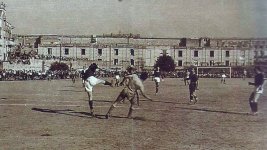
This second part of the story encompasses numerous documented events alongside others that have transcended into legend. During the World War years, the activities of the Botanical Garden came to an abrupt halt: its iron structures were dismantled for military purposes, large-scale cultivation of legumes, potatoes, and wheat was introduced, and on several occasions, the population sought refuge and water within its confines. Bombardments ravaged the Garden, mirroring the devastation inflicted upon the city. However, the true calamity unfolded during the occupation by Allied forces, who repurposed the area as a barracks: grasslands were paved over with concrete or sterilized, serving as parking lots for military vehicles, while a portion of the Garden was transformed into a sports field.
IMG_20250427_221611.jpg

Fast forward to 1945, where some seeds from the Calcutta strain mysteriously vanish from the center's laboratories. The botanical annals of the Garden document the presence of cannabis indica from 1946 onwards. Research at the experimental center would persist until 2010. However, during the war, many of the genetic strains and plants were collected and transported to other centers or even preserved and cultivated at home. Part of the Garden's genetic legacy would spread throughout the Neapolitan surroundings, particularly in the Nolana and Avellinese areas, as well as the Caserta region.


During these years, the United States government vigorously campaigned against cannabis, and prohibitionism began to take root in Italy through initiatives like the Marshall Plan in the post-World War II era. Amidst this backdrop, the theft of the Calcutta Strain seeds gave rise to three main theories:

1. They were pilfered by local populations and disseminated as seeds like other fruits and vegetables.

2. They were seized by the US government for research purposes or destruction.

3. They were stolen by the Camorra, a prominent criminal organization in Italy.


Of these options, the first seems the most plausible.

Regarding the other two I should write separately.

Just mentioning that The experimental station for medicinal plants, aptly named "il G-iardino" (The Garden), housed Plot Number 13 specifically designated for these studies. Within this clandestine garden, amidst the lush greenery and meticulously tended plots, the mystery of the vanished seeds took root, intertwining with the broader socio-political currents of the time.

Screenshot_2025-04-27-22-17-32-845_org.mozilla.firefox-edit.jpg
 
Chapter 4 – Far Away – Migrant Hybrid

This chapter takes us beyond Italy, focusing on the connections between Calabria and a world far away, shaped by waves of migration, cultural transplantation, and the complex web of legacy and identity.

The aftermath of World War II left Italy in a state of widespread devastation, with crumbling infrastructure, high unemployment, and a fractured society. Nowhere were these challenges more pronounced than in the southern regions, where poverty and economic stagnation persisted. Calabria, a land of rugged beauty and deep-rooted agricultural traditions, bore the brunt of this neglect. Decades of political instability and a central government’s indifference left Calabrians disillusioned, with little hope for a brighter future. Agriculture, once the region's lifeblood, was increasingly unprofitable due to outdated methods, soil erosion, and economic pressures. Struggling to make ends meet, many Calabrian families began looking for opportunities abroad, where dreams of stability and prosperity replaced the daily grind of poverty.

Beginning in the 1950s, a significant wave of emigration took thousands of Southern Italians to Australia, where the promise of new beginnings was strong. Among these were Calabrians seeking economic opportunities and a fresh start. Yet, they carried with them not only their traditions and vibrant culture but also the shadow of the 'ndrangheta—the Calabrian mafia. As Calabrian communities took root in Australia, notably in areas like Griffith, New South Wales, so too did the seeds of organized crime, transplanted and ready to flourish.

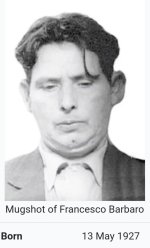
One of the most prominent figures in this migration narrative was Antonio Sergi, often called "The Godfather of Griffith." Sergi became a key architect in establishing 'ndrangheta operations in Australia, particularly focusing on cannabis cultivation and trafficking. His influence set the stage for a network of organized crime that spanned generations, with the Calabrian mafia becoming deeply entrenched in the rural Australian landscape. Alongside Sergi, other influential figures like Domenico "Mick" Barbaro and Robert Trimbole emerged, cementing the 'ndrangheta’s reputation and power.

Antonio Sergi's criminal undertakings began with conventional mafia activities—extortion, smuggling, and protection rackets—but he soon identified a more lucrative opportunity: cannabis cultivation. During the 1960s and 70s, as the global demand for cannabis surged, Sergi and his associates established sprawling plantations across remote parts of Australia. Griffith, in particular, became a notorious hub, often dubbed the "Marijuana Capital of Australia." Taking advantage of Australia's vast and largely unmonitored rural areas, the 'ndrangheta set up highly profitable cannabis operations, leveraging both local and international networks.

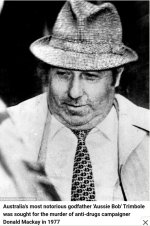
Following in Sergi's footsteps was Robert Trimbole, infamously known as "Aussie Bob." Trimbole was a pivotal player, expanding the 'ndrangheta's reach through sophisticated drug trafficking operations. He exploited connections between Italy and Australia to smuggle cannabis flowers and seeds and launder profits through seemingly legitimate businesses. Trimbole's involvement in the "Mr. Asia" drug syndicate underscored the mafia’s international influence, with operations that crossed continents and consistently evaded law enforcement. His cunning and ability to outmaneuver authorities earned him a near-legendary status in the underworld.

The 1960s marked a period of significant growth for the 'ndrangheta in Australia. As more Calabrian families settled in Griffith and similar areas, mafia influence became more embedded in everyday life. The 'ndrangheta’s dominance over the cannabis trade became increasingly evident, with sophisticated networks for production and distribution flourishing. Remote rural areas hosted hidden plantations, and mafia families protected their operations through a combination of violence and deep-rooted community ties. This period also saw the emergence of unique cannabis strains, as local varieties were crossbred with imported genetics, such as Old Mother Sativa, later influencing iconic strains like Calabrese Rossa.

The Legacy of Old Mother Sativa (Mullumbimby Madness Haze)
Version 1*
The origins of Old Mother Sativa, famously known as Mullumbimby Madness, are steeped in the countercultural wave of the 1950s-1960s and 70s. As Australia embraced the global hippie movement, the lush, subtropical areas of northern New South Wales, particularly Mullumbimby and Byron Bay, became epicenters of alternative living and spiritual exploration. Here, cannabis was not merely a recreational drug; it was a symbol of peace, freedom, and transcendence. These countercultural values harmonized perfectly with the potent effects of Mullumbimby Madness, a towering sativa strain celebrated for its cerebral high and psychedelic intensity.

Old Mother Sativa traces its roots to seeds brought to Australia by travellers, sailors, and immigrants in the 1950s and 60s. Strains from Southeast Asia, including Thailand and Indonesia, adapted beautifully to northern New South Wales’ subtropical climate. This region soon became a breeding ground for some of the most powerful and distinctive cannabis varieties. Cultivated by a network of free-spirited growers, Old Mother Sativa became a cultural icon, its earthy and citrusy aroma forever linked to the era's ethos of consciousness expansion, environmental stewardship, and organic farming.

During the 1960s, the Byron Bay and Mullumbimby areas transformed into havens for artists, musicians, and counterculture enthusiasts. These communities valued communal living, spiritual awakening, and a deep connection with nature, and cannabis played a central role in their worldview. Mullumbimby Madness, with its mind-expanding effects and towering plants, became a favourite among these communities, enhancing creativity, spiritual insight, and a sense of unity with the natural world. The strain was cultivated using organic methods, in line with the hippie values of environmental harmony and sustainable living.

Despite the idealism of the countercultural movement, the cannabis trade was also shaped by more sinister forces. The 1960s and 70s saw the 'ndrangheta’s growing influence over the Australian drug market. Mafia families like the Trimboli 'ndrina used the region's isolation to establish clandestine cannabis plantations, exploiting both the geography and local demand. While the hippies cultivated cannabis for enlightenment, the 'ndrangheta viewed it as a commodity, one that could generate immense profit and fund their criminal enterprises. Figures like Robert Trimbole played a critical role in creating a transcontinental cannabis trade, linking Australian growers with Italian syndicates and smuggling operations that spanned the globe.


* This hystory has been told to me by Hombre de Barro Aca Tropical Seeds Company. There is also a version 2
 
The story of how the legendary Calabrese Rossa strain was born from the possible union of Old Mother Sativa and Calcutta indica strains is steeped in myth and intrigue. While some accounts credit the natural evolution and organic cross-pollination that occurred in the fertile hills of Calabria, others point to the calculated involvement of the ‘ndrangheta. The mafia's role in transporting cannabis seeds from Australia back to Calabria is more than just a whispered legend; there is substantial evidence suggesting a sophisticated network that facilitated this genetic exchange.

The origins of this crossbreeding are shrouded in questions: were these hybrids the result of intentional breeding, or did they arise through a process of natural selection? In either case, the methods used for culling and selecting the best plants were likely rooted in the agrarian traditions of the Calabrian farmers. Just as these farmers had meticulously cultivated tomatoes and other crops for generations, choosing the strongest and most productive specimens, they applied the same principles to their cannabis cultivation. This careful selection process led to a strain with the vigor, resilience, and potency that Calabrese Rossa became known for.

A critical aspect of understanding the significance of these developments lies in the timeline. By focusing on the dates, one can appreciate the groundbreaking nature of this hybridization. The 1950s and 60s were pivotal years in cannabis cultivation, as Calabrian growers were already experimenting with crossbreeding well before the rise of the famed Dutch strains or the advent of California’s first Skunk hybrids. This early hybridization produced potent strains that would later dominate the underground market and spread far beyond Calabria’s borders.

During the 1970s, the cannabis scene in Calabria—and indeed, the broader drug market—began to shift. The introduction of heroin marked a dark and significant turning point. The ‘ndrangheta, which had already established a foothold in the cannabis trade, recognized the immense profits that could be made from heroin trafficking. As heroin consumption and demand surged across Europe, the mafia redirected much of its efforts and resources towards this lucrative trade. This strategic move changed the landscape of organized crime, as natural substances like cannabis took a backseat to more profitable, albeit far more destructive, drugs.

Nevertheless, the legacy of early cannabis hybrids like Calabrese Rossa endured. Even as the mafia focused on heroin, the genetic heritage of these strains continued to influence cannabis cultivation worldwide. The groundwork laid by the ‘ndrangheta in crossbreeding and distributing cannabis varieties helped shape the future of cannabis genetics. The strains cultivated in Calabria in the 50s, 60s, and 70s are a testament to a bygone era, one where the intersections of culture, tradition, and crime produced some of the most potent and culturally significant cannabis strains in the world.
 
The 1960s saw an increase in the use of cannabis, heroin and LSD as part of political and social opposition to the Vietnam War, and this resulted in most Australian states gradually moving to a prohibitionist and criminal-justice orientation.

Right-wing Australian politicians like Queensland premier Joh Bjelke-Petersen and NSW premier Robert Askin supported Nixon's War on Drugs in America, calling for a crackdown on Australian youth culture. Following the fall of the Whitlam government in 1975, these politicians launched a Nixon-style war on drugs in Australia.

In the late 1960s, organised drug trafficking developed in Sydney with the arrival of US servicemen on leave from the Vietnam War, and the local drug markets expanded to meet their requirements.


The 1970s were considered the first "decade of drugs", marked by the public's growing financial capacity to support drug use and an increase in young people affected by unemployment. As a result, the 1970s were also the decade of Royal Commissions and inquiries to deal with the "drug problem".

In 1964, with the discovery of hundreds of acres of wild hemp growing in the Hunter Valley in NSW, authorities responded with a massive eradication campaign. However, the baby-boomers of the 60s responded to the "evil threat" in a very different manner to the previous generation, with groups of surfers and hippies flocking to the Hunter Region in search of the wild weed which was described in reports as "a powerful psychoactive aphrodisiac".

These groups became known as the Weed Raiders—legendary characters, bearing tales of plants up to three metres tall.


From Wikipedia Cannabis in Australia

Screenshot_2025-04-27-22-20-45-551_org.mozilla.firefox-edit.jpg
 
Screenshot_2025-04-27-22-21-29-854_org.mozilla.firefox-edit.jpg

Such recorded the first time Griffith would be so publicly linked with the ‘ndrangheta, the secret criminal society which was at the time, labelled with various terms, such as the “Camorra”, the “Mano Nera” and “Black Hand Society”.


By the 1960’s, Griffith’s population consisted of a near 70% ratio of Italians. In 1951, Plati had suffered a devastating flood, which served to bolster the steadily increasing flow of Calabrian migrants to Griffith. It was this year that saw the arrival of numerous Barbaro, Sergi, Romeo and many other families with surnames that would become notorious.

Screenshot_2025-04-27-22-21-44-198_org.mozilla.firefox-edit.jpg
 
Recently i've come across this book "the Sydney Connection" and it includes of "history of cannabis" in Australia.

Being originally from Europe, where i lived to the age of 30 (1982), I knew very little about what happened in Australia in the 60 s and 70s regarding drugs, hippies etc.

So this is very interesting for me.

And I bet there's a lot of Australians (and others) out there, who knew next to nothing regarding the matter since it's all taboo.

It appears, the present days are "the dark ages".

People still get severely punished for cannabis and other drug use.

Why does it have to be like that?

,A Short History of cannabis in Australia, 1788-1977

by John Jiggens "The Sydney Connection"

From the first fleet to the Murder of Donald Mackay

The first cannabis seeds arrived in Australia in 1788 on the First Fleet at the request of Sir joseph banks, who marked the cargo "For Commerce".

The blueprint for the colony in New South wales , appproved by the British cabinet in 1786, envisaged Australia as a commercial colony producing hemp.

Hemp was what the plant cannabis sativa was called when Australia was founded. The word "marihuana" was unknown in Australia until 1938.

In 1804, Governor king wrote to Sir Joseph banks describing the ten acres of cannabis he was cultivating the Lowlands of the hawkesbury and the nepean rivers, which were growing with the "utmost luxurience".

With self-sufficiency achieved, the infant colony needed to develop a "cash crop", and Governor King proudly declared to Banks that his cultivation of hemp had "set the example".

For the first 150 years of white settlement, governments in Australia actively supported the growing of hemp with gifts of lands and bounties and other grants.

The consumption of drug cannabis became widespread in Australia in Victorian times.

Queen Victoria herself was a cannabis user and cannabis was legal and freely available.

Many of the popular panaceas of the time, including Australia's favourite tipple, Dr. Collis Browne's Chlorodyne, used cannabis as a base.

Cannabis was also used as an intoxicant by the literati.

Marcus Clarke, Author of the great Australian Novel of the nineteenth century, "for the term of his natural life", was a cannabis user who experimented with cannabis as an aid to writing.

One of his short stories, written under the influenece of cannabis, was called "cannabis indica".

The bohemian Yorick Club in Melbourne- of which Clarke was a member- were notorious as cannabis users.

In 1938, the plant "cannabis sativa" was outlawed in Australia as a result of a reefer madness style campaign in the Digger's newspaper, "Smith's weekly", orchestrated by the US Bureau of narcotics and it's Commissioner Harry J Anslinger.

This campaign introduced the word "Marihuana" into Australia.

Marihuana was described as " a new drug that maddens victims".

It was an "Evil Sex Drug" which causes "it's victim's to behave like raving sex maniacs."

For this generation of Australians, cannabis was to be "the dreaded sex drug marihuana".

This American renaming of cannabis as "marihuna" meant that most Australians were unaware that this dreaded new drug was the familiar drug cannabis which they had used for many decades without concern.

The love-hate relationship of Australians to the geneus cannabis took another bizarre twist in 1964 with the discovery of hundreds of acres of wild hemp growing in the Hunter valley.

The authorities responded with a massive eradication campaign and another "evil sex drug marihuana" propaganda campaign.

However, the generations had changed.

The baby-Boomers of the Sixties responded to the "Sex Drug" propaganda in a different way than their parents.

Soon groups of surfies and hippies were organizing expeditions to the hunter in search of the wild weed. These groups were to become known in Australian marihuana folklore as "the weed raiders"-the first pot smokers- legendary characters who returned from expeditions to the Hunter with sleeping bags full to the top, and tales of monster plants 12 feet high.

In 1967, the Beatles closed their album "Sgt pepper's lonely heart's club band" with "A Day in the Life' - a musical confession about their pot smoking.

The songs chorus was "I'd love to turn you on".

And a generation did.

Within a few year's of "Sgt pepper's" pot smoking became widespread in Youth culture, not just in Australia but throughout the world.

Sydney emerged as the center of Australia's cannabis explosion because it was blessed with a seemingly inexhaustible supply of cannabis.

From 1964 to 1969, it had the Hunter Valley crop, hundreds of acres of wild pot growing only 180 kms north.

After September 1967 it had the US Servicemen of "R and R" (rest and recreation leave], flying in from Vietnam, with some of the best pot on the planet.

Cannabis supply suddenly became no problem.

If Sgt Pepper's was the spark, Sydney's supply-side surplus was the fuel for Australia's marihuana explosion.

It was the young who were turning on.

Then as now, pot-smoking was concentrated in 18-24 year old group.

A 1971 survey by the NSW Department of health in Sydney's northern suburbs found that while only 9% of the population had tried pot, 25 % of the people aged between 18 and 24 years old had used cannabis, and 13% of this age group smoked pot regularly.

None of the over-thirties smoked pot at all.

In 1973, when Australia's most popular band, Daddy Cool, releaSED THEIR 2ND ALBUM, ITS TITLE SAID IT ALL:

"Sex, Dope and Rock'n'roll: Teenage heaven."

1973, the year of teenage heaven, was the first year of the left-wing Whitlam government.

It was the time of the Aquarius festival in Nimbin, sponsored by the Australian Union of Students, with a grant from the Whitlam government.

At that festival, Pot was smoked openly, and 5000 students rioted when the police attempted to make a drug arrest.

By 1973 marihuana was well established in Australian Youth culture with about 500000 smokers, most of them under 30.

Pot was now a multi-million Dollar industry.

Whe R and R tours ended, the demand for pot provided an enormous impetus for Australian Marihuana growing.

In 1974, the bulletin published an article about "Australia's Marihuana Millions" by david Marr that estimated the size of the Australian marihuana marketat 80 Million dollars.

"Pot", claimed Marr, "was now as big as BHP."

This huge industry was largely in the hand of Amateurs.

Because Police and Customs were unfamiliar with pot, the Sixties was the golden age of smuggling, and there were many Sirfies and hippies and ethnic businessmen, willing to give pot a go.

In the 60s, the pot scene was devoid of the criminal element that would become pervasive after 1976.

It was run by amateurs, young people who were drug enthusiasts themselves.

Much of the 60s drug-taking was purely "experimental" and "safe'.

For sixties counter-cultural youth, addictive drugs like heroin and speed were "uncool" and the hippie dealers would not touch heroin; providing an effective border against heroin expansion, which the criminal takeover needed to smash.

The good sense of this drug-taking was encouraged by the underground press, which published many well-informed articles, including interviews with leading drug-researchers like Timothy leary.

Under current censorship laws, much of this content would be illegal today.

(Remark of typist: Australian censorship laws today are very much like Hitler's, who loved burning books that would not agree with his dictatorship.)

Whitlam and the politicisation of cannabis

The decade after 1964 when pot use exploded in Australia was the era of the Vietnam conflict and, just like in Vietnam, pot use divided the generations. As the conflict over Vietnam deepened, it divided Australia, pitting left against right, and old against young.

In this overheated context, the pot leaf joined the moratorium badge as a revolutionary symbol. To share a joint at a party was "to join the revolution."

The politicisation of the cannabis debate became even greater when, in december 1972, baby-boomer votes took Gough Whitlam and the ALP to victory. Far less subservient to the US than his predecessors (remark of typist: Look at our present slimy mr howard who at every opportunity licks and kisses the boots of that pig president Bush) Whitlam pursued a policy of independence.

Conscription was abolished, draft resisters were released from jail, and troops withdrawn from Vietnam. The people's republic of China was recognized. During president Nixon's Christmas bombing offensive against North Vietnam, Whitlam took a critical line, condemning US policy and enraging Nixon and kissinger. Whitlam's government pursued an indepent line in drugs policy too, intending to decrimalise marihuana Australia-wide in 1975.
 
Whitlams term as Prime Minister ended in 1975 when he was dismissed by the governor-generaL , sir john kerr.

Whitlam's dismissal- the constitutional coup of 1975- is one of the most controversial issues in Australia's history.

(Remark of typist: It's a bloody outrage. that's not democracy; the stupid queen lets a fart go, and her puppet ousts the australian prime minister. Australia is nothing but a colony after all. Independent? What a joke!)

It ended three years of extensive social and cultural reform which enraged conservative Australia.

(remark of typist: The conservatives are the root of all evil!)

For the triumphant conservatives, it was time- time for revenge.

Marihuana use provided a suitable pretext for the elderly conservatives to attack their youthful opponents.

As the polls showed, pot-use was almost exclusively a baby-boomer indulgence.

As the Sackville Royal Commission noted, cannabis use was regarded as confined to groups, such as radical students, "hippie"-dropout, and opponets of the Vietnam-War.

Following the defeat of the Whitlam-government, Australian Conservatives launched a Nixon-style "War on drugs" in Australia. This war on cannabis was most extreme in Queensland where Queensland premier bjelke-petersen (r.o.t.: that old rotten stinking pig, great he's dead) called for a police-crackdown to drive marihuana users out of Queensland.

The result was the Cedar Bay raid on a hippy commune in far north queensland where houses were burnt to the ground and orchards chopped down as the queensland police went on a rampage. (r.o.t.: Hitler all over fucken bjelke-pig-bastard!)

This trial of US-style "war on Drugs" policies in Australia after 1976 was accompanied by some unusual "mega-features":

Firstly, there was a criminal takeover of the pot scene in 1976, and then a marihuana drought, followed by a heroin plague.

This was the time when Australia was narcoticised. it was also a time of numerous murders of which the murder of Donald mackay was the most famous.

The Criminal Takeover

Throughout the summer of 1976/77, the Australian Underground press carried a number of reports of an attack on the old hippie dealing network by organized crime. Although the reports came from all over Australia and new Zealand, they were remarkably similar:

Marihuana only dealers would be visited by "heavies" who offered a "simple choice": either deal heroin or get out.

Along with US style prohibition, US style organized crime came to Australia.

David hirst, who examined the criminal takeover in his book "Heroin in Australia", characterized the pot scene in Australiabefore the criminal takeover as a "cornershop"-system of totally disorganized crime, which was "one of the remaining aspects of an otherwise disemboweled counter culture.

Hirst interviewed a Number of these"corner shop proprietors in Sydney, canberra and melbourne shortly after the criminal takeover and found their reports alarmingly similar.

In each case a large number of men(up to ten) arrived at night and terrorized the household. They had knowledge of the activities of the dealers and demanded money and drugs.

They raided only dealers who refused to handle heroin and left threads of what would happen "if another deal left the house."

A similar story emerged in Brisbane where "the cane toad times' described the situation in Queensland at the start of 1977.

"The past season saw violence, rip=offs, and the thin blue line fanning out, Dope was in slack supply and in increasing prices.

According to"the cane toad times", pot was almost impossible to get in December 1976:

"No-one was singing All I want for Chrismas except to the Untouchable, Robert Stack.

(Rhyming slang for smack or heroin which began to flood through brisbane's underground at this time.)

One youth arrested by the police was about to shoot up for the first time. In court he pleaded "I'm sick of drinking, there was no dope, and I wanted to get stoned."

This would become an all-too-familiar story.

In his book "new zealand green", Redmer Yska described a similar pattern in new Zealand; a legendary hippie era when "the blissed-out tribes of early pot-smokers rarely sold "sacramental cannabis" for profit, which was relaced by a criminal network around 1976.

There is a consistent pattern in this reports; sometime in late 1976 an organized crime group moved into the drug scene in Australia and new Zealand. They attacked the counter-cultural "grass-only" dealers demanding they sell heroin or get out.

The old hippie-dealers with their ethic of "consciousness-expansion" were removed. The Age of "Robert Stack" was looming.

Marihuana Drought

Following the murder of Donald mackay, pot almost disappeared from the street. This is the time remembered in marihuana-folklore as "the drought" or "the great drought"- when for months on end, pot was almost impossible to obtain. The reaction to Don mackays' murder closed down the griffith operation and with the old hippie network now the subject of attacks by both the police and organised crime, the collapse in Marihuana supplies was dramatic. Those who benefited most were the heroin-pushers. With pot unavailable, heroin-sales went through the roof.

During these years, the amount of South-East-Asian heroin entering Australia increased enormously.

According to the underground press, the drought was caused "by a heroin conspiracy."

The police took a different view:

"Given the vast amounts we were seizing, boasted a senior Commonwealth officer, "it is very likely we have created a marihuana drought."

heroin plague

Heroin meanwhile kept a steady price and had a remarkably high purity.

The lower grade NO3 South-East asian heroin, which had dominated the market ebfore 1977, gave way to more refined No 4 grade powder.

NSW police reported an alarming increase in heroin abuse in the first six monthsof 1978, citing a figure of 7000 to 10000 addicts in Sydney, the police said Sydney was now the heroin capital of Australia.

In January 1979, Bill Crews, director of the crisis centre of the Wayside Chapel at kings Cross, spoke about the changes occuring in the street drug scene as a result of the crackdown on pot:

"More and more of these people who can't get marihuana are getting into mandrax and alcohol and also heroin. When grass was around, they used that most. But now it's mandrax, heroin, and they are into booze as well."

......

As david Smith, a doctor at the height Ashbury Free Clinic in San Francisco, commented:

"The government's line is that the use of marihuana leads to more dangerous drugs.

The fact is that the lack of marihuana leads to dangerous drugs."


Edited September 5, 2006 by gomaos
 
Screenshot_2025-04-27-22-27-41-100_org.mozilla.firefox-edit.jpg

At first, it seemed innocent enough.
A sleepy colony, vast sunburnt lands, and a hardy plant named hemp — cannabis sativa — growing under an endless southern sky. For over a century, cannabis lived quietly in Australia’s soil, an industrious ally for ropes and sails, for medicines and tonics. But by the 1960s, everything changed. The same plant, now called "marijuana," had morphed into a revolutionary symbol — a green flag for youth rebellion, counterculture, and the dream of a freer world.

What few realized was that another revolution was unfolding beneath the surface — silent, ruthless, invisible.
And it came from across the seas, hidden among the immigrant families from Calabria, southern Italy.
It was the 'Ndrangheta, one of the world's oldest and most secretive criminal brotherhoods, and they understood something the hippies and surfies did not: cannabis wasn’t just a drug — it was a business.

As the Hunter Valley's wild weed was raided by starry-eyed dreamers, in places like Griffith and Mildura, Calabrian farmers — some with blood ties to mafia clans — were quietly planting another kind of seed.
Fields of cannabis stretched between vineyards and tomato rows, hidden in plain sight.
The 'Ndrangheta wove their network through kinship, loyalty, fear.
They didn’t need guns — not yet. Their power grew like vines in the Australian heat: slowly, imperceptibly, inevitably.

The youth smoked. The hippies sang. The cannabis flowed freely into Sydney’s beaches and Melbourne’s alleyways.
Few questioned where it came from.
Few asked who was getting rich.

Then, in 1977, a man named Donald Mackay dared to speak.
He named names. He called out the crops and the men behind them.
And one winter night, he disappeared — without a trace, without a body, without justice.
The message was clear: the fields belonged to the mafia now.

After Mackay’s murder, a deep fear settled over Australia's cannabis world.
The "Great Drought" began. The easy flow of pot dried up. In its place came heroin — cheap, pure, and deadly.
The same hands that once cradled seeds now trafficked powders.
The 'Ndrangheta didn't just hijack cannabis — they engineered an entire market shift, pushing Australia from the mellow highs of weed into the hard crash of heroin addiction.

The government declared a War on Drugs.
The streets filled with violence, overdoses, broken dreams.

And somewhere in the quiet fields, under the burning Australian sun, the 'Ndrangheta smiled.
Their seeds had grown into an empire.

To be continue ( April 2025)
 
thanks for the story, I really enjoyed it.

I did sampled the "Calabrese Rossa", it was a real pleasure, unfortunately, at least in the north of Italy the Calabrese was then replaced with round discs of "Pressatone Albanese" that was weed pressed into circular shaped bricks, it totally sucked that weed from Albania, really.

It did looked something like the picture I am attaching, but not with all those red hairs, was more just shades of green, low quality. I have seen square bricks from Jamaica, always shades of green, low quality weed too.

There was weed, brick pressed, that smelled of ammonia, people were saying it was because they'd pee on it, for a stronger effect (!?!). I declined to try that :D .

Oh yeah, fuck monopolies and mafia and 'ndrangheta (mafia from calabria they have like 90% of cocaine market in EU atm) in general, I love freedom of knowledge, making and spirit, whoever likes cartels has some serious problems. Italy is a country where things are going backwards, and it is especially because of all the ramifications of the various type of criminals. I do not believe that dealing drugs, but I mean deal not commerce, is a crime, nor that drugs should be illegal, but they should be the actually drug ones look for, not a drug full of adulterants and addictive components.

One might see the Calabrese rossa as a nice history lesson, but it is intrinsically related with real monsters of people, real criminals, these person do not deal with Cannabis, they deal with addicting substances, the fact that in Italy you find more cannabis and related stuff that makes you sleep, depends on the fact that is better suited for the cocaine market, cannabis related products are seen as a way to go to sleep after doing lots of coke in Italy, is a culture that is disgusting.

I heard people talking about cocaine like is no big deal in Italy, that is safer then cannabis and that are cannabis user the problems not the cocaine addicts. Usually mafia bosses brags that they do not use drugs, but the sell it that is far worst.

I know people that have ruined themselves with legal, even if sourced illegally, benzodiazepines and they were open critical of cannabis because it is illegal so it must be bad, how ignorant one have to be, to think that something produced by man is superior to nature creation? Comes in my mind this phrase I read on a pin while teenager:
"Men invented alcohol, God created Cannabis, who are you going to trust?" I was not using cannabis at the time, but when I started studing cannabis before I started using it, I really thought that is a fact not a slogan that phrase. Even the use of invented vs created is really important. I have never heard Italians, honestly, just once, making that point. I have used it a lot of time, and it get great result, especially with religious people.

Mind you that I am not advocating any drug to be illegal, quite the opposite, I think there is no need to limit freedoms in any way, I believe non free software is a crime against humanity. I think that crimes like selling substances with addictive or deadly cuts just for profit is really another crime against society.

I lived in Italy for a while and honestly the way people part with mafia related people and way of life is shocking. I have heard people on the bar talking good about mafia bosses because those bosses did not use drug themselves, they just sold the crap to other people, how can one condone such criminals?

Mark was not a criminal he was dealing medicine, he wanted Cannabis and derivatives to be freely available to anyone, he was suggesting to auto cultivate. He is one of my heroes, we need more masters like him, people that were making a deal, not a business. There is such an incredible difference among people that do it for excellence and who do just for the profit, the latter usually produce crap sooner or later, enshittification is what happens when one is driven primarely by gains.

In Italy if you buy your drugs daily, going to you local pusher, not matter what drug, is not a crime, really, just get your daily dose of coke with no problem, but try to grow a plant of cannabis and the prison sentence is the same of one a pedophile gets in Italy. How is it possible that in Italy lots of people glorify pushers? I hate fucking pushers they are the reason Cannabis and the other drugs are still illegal. I see nothing bad in drugs, but I see a lot of bad in dealing them.

Why Italians are such sheep when it comes to free medicine? Most of the Italians I know they do it just for the money, for themselves with no thought to the near or distant future. I wonder if the "Secret Cup" that was a "secret" cannabis cup in the south of Italy is still going, they made it semi public some years ago while it looked like that legalization was going to happened, thanks to Benedetto della Vedova, but then all the legalization effects stopped because of actions from the religious part of the Italian political spectrum and also because they crafted the law so that also cocaine would have been legal... They really have no shame. In Italy there used to be a law that made less risky, legally speaking, to carry a gram of cocaine than a gram of cannabis. Such a BelPaese.

Cannabis is legal in Germany, in Italy they made CBD illegal again... Italians are nowhere to be heard on this, they just stay silent, stay omertosi (omertà = means to look the other way, to think you can do nothing to change anything, to be part of the losing team).

I witnessed lots of injustices in Italy, never saw once someone trying to change the system, they bent the system until it does not hurt them any more, it is seen as a best practice unfortunately.

For all the italians out there, La Vera Storia della Marijuana di Massimo Mazzucco is a nice documentary, it should be at this link
(I can not confrim the validity of that link now, because those suckers of youtube have once again changed how they serve videos and invidious is not working atm https://redirect.invidious.io )
A good book in Italian is:
Cannabis. I mille usi di una pianta miracolosa. Chris Conrad. 1998
you can find it online for around 6 euro, very nice history of Cannabis in that book, more in depth compared to the documentary.

It is thanks especially to the mafia from Sicily that weed disappear and cheap cocaine appeared in the street and parks, at least in the north, it was possible to buy a sacket of white powder for the equivalent of 25 euros in 5 minutes, but weed and derivatives where nowhere to be seen or people had to wait days and get whatever it arrived with no choices. Those people, that in the north east where represented by the "Mala of Brenta", with the infame Felicetto Maniero as the boss are the same people that now keep pushing for weed to stay illegal. If you know some criminals, and if you are Italian you unfortunately probably do, you need to tell them to stop to messing with people free medicine, with arguments of course, and there are tons of arguments pro cannabis. I got in more then one arguments with dealers of all level of why, even if legal it would be good for them, I mean...if they legalize and you already have the supplying chain going, it can't be that hard to converted it in a legal system.

Probably it is just because these suckers be them 'ndranghetaa, camorra, sacra corona unita, mafia or else, just think about themselves. :( So sad, money over nature.

Once might think I dislike 'ndrangheta and related stuff, I do.

:D

To all of you, I highly suggest to listen to the first 7 seconds of this video
if you do not feel like doing that, here is it what that men said:
"I tend to think of things in terms of:
justice,
freedom,
and
ethics."

That men is Dr. Richard Matthew Stallman he has 15 honorary degree, yes he is a genius, you can read the philosophy of his project named "GNU project" on the website gnu dot org.

Stay safe!

All the freedoms are equally important!!! Really, if we start to lose one, sooner or later we will lose them all. If you never did, have a look at the TEDx talk I have in my signature.

If you can support the Free Software foundation!!!
We all need to be free, especially in software, have you ever thought about the fact that all the richest men in the planet have something to do with software? Or social.
 
Back
Top