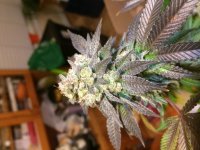
Who has the real RoadKill Skunk ?

I seriously doubt that. I never saw any Lebby or Moroccan tops in California ever. It was all hashish. And hashish did not have seeds. Nor does Lebanese have the terpene or cannabinoid profile for breeding skunk. I have grown a lot of Lebby weed here in the past several years now. It took me 2 years to source seeds for it through Europe. I have Blue Hemp and RSC IBL beans. They grow the same. Bekaa Valley genetics. True to form, they throw two phenos. A sativa pheno, and an indica-like pheno. They are pleasantly mild with light terpenes. I grow in a mild climate here and I cool cure my bud, so I get the most terpenes out of my grows. Lebby has a light floral profile. You can look at Ace Seed Co and they have posted 4 different terpene and cannabinoid profiles for Lebanese. Lebby is also high in CBD, and skunk has near zero CBD. So they did not come that route. Sorry. Nor is Lebanese an indica. Its a sativa... more mis-information passed down through the ages.

The more I collect and grow the Mediterranean landraces, the more I am convinced that they are 1) related, 2) much older than people say they are and have been grown there for much longer than people say they have been, 3) they are all sativas. Not that sativa and indica really mean anything. Newer research says that the psychotropic Cannabis strains are much more closely related than previously thought, as compared to hemp from Northern Europe and Ruderalis of northern Eurasia.

wow i wish i could taste even one of those landarace, looks like some dream to me. mild climate gives you more terpenes ? interesting...

how did you come to the conclusions the mediterannean landraces are much older ?

Just curious, do you know how many mediteranean landraces exist ? or how many pure landraces exist or existed in the world?

is it possible to even know how many landrace there is or there was since the stuff is illegal in most places ?

Very interesting discussion and i want to thank you for sharing your great knowledge in my discussion guys, i am very humbled.

I'm sorry in advance for all those questions Big Sur and others, look like some flood

haha

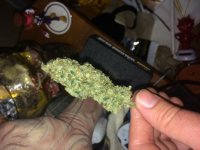
what do you think of this skunk that my friend growed.

does it look like the real thing for you ?

and some bud porn ! a girl scout cookie that just finished 3 weeks ago at my friend's house, taste like mint cookies real good. frosty enuff

i meant that the bud is skunk but the plant is gsc
 

Attachments
  • skunk 1.jpeg
    skunk 1.jpeg
    369 KB · Views: 7
  • GSC.jpeg
    GSC.jpeg
    53.4 KB · Views: 12
Last edited:
WTF? You think that you cannot make sifted hashish from a sativa? Lebby hash is sifted trichomes from well dried plants. They could be sativas, indicas, hybrids, or Ruderalis. Makes no diff. Dry, sift and press.

The 'generic' Lebanese landrace throws two phenos, one a sativa, and one an "indica-like". As in it looks like an indica, but the colas are more open and are not tight like indicas at all. Both phenos come from the one strain. That confuses people. Traditionally Lebby weed has been identified as an indica, but now that more of us are growing it we believe they are sativas. Including Ace Seed Co. in Spain. The two phenos have the same flavors and high to them though. The CBD and THC levels vary from plant to plant, and the terpenes have a range. They traditionally make weed into hashish in Lebanon, as that is what was in demand in Egypt when Greece banned weed growing and hash making in the 1930s. It is also a lot easier to smuggle and transport. The same sifted method for making hash was taken from Lebanon to Morocco by the hippies in the 1960s as well, but they did not take the plants or seeds with them, just the hash making method.

Like it or not (you obviously do not) when you collect and compare the older landrace strains from around the Mediterranean Sea area, they are rather similar in growth and habit and highs. At least that is the case with the seed samples I have access to. More to come on that front. I will be growing several more landraces from around the Mediterranean to compare. "They" say that they are all similar. But that has nothing to do with skunk, and skunk was not a Lebby hybrid IMO. Nor was skunk bred in SoCal as you claim. I know of no one else that has ever made that claim. No one. Going back 40 years now. You also claim that Haze was bred in the Emerald Triangle. I think it was a landrace from West Colombia. I have the beans from then and there, and genetics will prove me wrong or right about that. But hey, what the fuk do I know? Nuk nuk nuk... other than growing lots of Lebanese and smoking lots of skunk and Lebby hash back in the day. The Bekaa Valley is considered to be the benchmark of Lebanese hashish.


Go back and read my post on page 4 of this thread.

Nothing I have posted pertains to skunk#1 or super skunk, or any other Amsterdam product.
I have only posted about the original California skunk which has of late been termed as "road kill".

If you took those old skunk buds and put them in a carefully rolled up bag, taped it shut, put that in carefully wrapped tin foil, and put that in another carefully wrapped and taped baggie....it still stank, strong enough to smell 10 feet away.
That is the bud I'm talking about.

Mel Frank never saw it, neither did Nevil or Skam the Skankman.
Exactly how do they know what it looked, smelled, or tasted like?
They didnt, and still don't know a thing about it.
If they did, skunk#1 might not be anything like it is today.....it would at least resemble ....skunk?

BigSur, bekaa valley isn't the only place in Lebanon and yes they did have pure indicas.....kinda hard to make hash the way they do with a sativa.....right?
No, I have no clue what they have over there these days.....last time I was there a barrack blew up all around me, that was 1983....look it up.

Honestly.
Why do you guys think there is no real skunky skunk these days ?
The market would snatch it up in a heart beat, right?
Why then has it not been replicated?

It's because you cant get there with Amsterdam strains.....no amount of crossing them will get you there, no how, no way.

Please stop with the supposition and hyperbole.....please.
 
Last edited:
Such insight....implying that hippies brought hash making to Morocco?

Dahfuk...you're off by about 1200 years or so bud. It was the romans that spread the hash and weed. There are many Roman ruins all over the area with pot leaves inscribed in them (look it up).
You might even further your knowledge by looking into assasin/hashassin and the "hash eaters" from medieval times.

I'm certain you'll tell us all about dry sifting tiny little sativa trichomes, perhaps instead of talking about it....actually try doing it.
Nothing like actual experience to change a person's tune.
Of course you've seen them collect cream in person and not some weak arsed YouTube video......right ?

I've been there and have seen it in person.
I don't spew what has been bandied about as "common knowledge" from some crotch scratcher without a clue.

I honestly respect Shanti, but his forums seriously lack and that was why I have already had a 10 year hiatus from them, perhaps it's time for another.
 
Skunk was not around in the 60s. Skunk was around in NorCal in the later 1970s. Whatever you want to call the later Dutch Skunk strains, #1, #2, whatever...they are derived from skunk beans taken to Holland by Watson or sent there by Mel Frank. They have posted about doing that in various places. What Watson did LATER after 1986 in Holland I do not know about. I was not there. We are talking about original California skunk here. Or at least some of us are. It and several other strains like Cali-O were bred in California. Take California Orange as another example. Jerry Beisler bred it circa 1974. Watson later got some beans of Cali-O and claimed that he bred it. There was a huge flap over it in Canada one year at a weed convention. Jerry proved that he bred it with documentation in his book, The Bandit of Kabul. So we know Watson lied about that. He also lied about Sacred Seeds. It never existed. There is no evidence of its existing. Except in his article in High Times mag. But do not believe me. Have a look see here:

https://www.cannabisfarmer.com/treating-yourself-meet-dr-frankenbeanstein/

I started freezing seeds in 1977 after reading the book Marijuana Potency. No need to keep them growing or refreshed. They are frozen, seemingly for eternity. 0 deg F. and they last forever. I have sent my beans to several growers around the globe, and they remain viable. 60-100% germination rates. When I say they are extinct in their native locations, I cannot verify that as fact, but that is what all the guys on the Latino sites tell me. Colombian Gold, Punto Rojo, Mangobitche, etc. No one grows them in Colombia any more according to the Colombians living there now. Similar to what I hear from SW Mexico. They say the only beans left from those days are the one that us hippies got in the 60s and 70s. Their words, not mine. Farther north Zacatecas Purple is thought to be long extinct. I cannot prove it one way or another, and if I went digging around for it in Mexico today I would likely get my head blown off.

In their native habitats, Colombian gold, Zacatecas purple and Acapulco gold are said to be extinct. Afghani is still around in Afghanistan though.

Nice call, so i guess that sam the skunkman that went thru 100K beans to breed Skunk numba 1 ( the story that parents read to their children before bed ) was all fake , bells and whistles.

Sux no jokes i told this story to at least 10 peoples in the past thinking it was true :#

so you keep landrace alive ? wow what a nice hobby my friend, why are mexican and colombian landrace extinct? how can you be so sure since it's illegal there ?

So now that we know cali got Skunk CIRCA sixties or seventies so it must have been there before the netherlands.

then to the second most important question of our great adventure, is Skunk number one a mix between Colombian Gold, Acapulco Gold and Afghani ?

is it those landrace that are exctinct ?
 
Such insight....implying that hippies brought hash making to Morocco?

Dahfuk...you're off by about 1200 years or so bud. It was the romans that spread the hash and weed. There are many Roman ruins all over the area with pot leaves inscribed in them (look it up).
You might even further your knowledge by looking into assasin/hashassin and the "hash eaters" from medieval times.

I'm certain you'll tell us all about dry sifting tiny little sativa trichomes, perhaps instead of talking about it....actually try doing it.
Nothing like actual experience to change a person's tune.
Of course you've seen them collect cream in person and not some weak arsed YouTube video......right ?

I've been there and have seen it in person.
I don't spew what has been bandied about as "common knowledge" from some crotch scratcher without a clue.

I honestly respect Shanti, but his forums seriously lack and that was why I have already had a 10 year hiatus from them, perhaps it's time for another.

G `day N2

Smoking Kif [buds ] mixed with tobacco was traditional in Morocco .
Hash making really took off in the 70s . And yes the story goes westerners brought hash making . The king of Morocco had given the tribes people amnesty to grow ganja as a reward for their loyalty during a war .


Lebanese strains may have been brought from Greece . There was a hash culture there once upon .
The Greek hash makers moved over to Lebanon after Greek laws changed .

Thanks for sharin

EB .
 
Last edited:
For the record, hashish was made in Greece up to the 1930s when it was banned there. What grew in Greece was Kalamata Red, a sativa. This notion that indicas were only used for making hash is nonsense. Now, was I in Greece in the 1920s to confirm this? Obviously not. But I will be growing Kalamata Red here pretty soon though. I will also make sifted hashish from it, like I am making sifted hashish from my Lebanese grows here now.

Back to skunk, I am thinking that what was known as skunk in Cali in the 1970s were likely multiple strains developed by multiple people in multiple places. In my experience it showed up all over Central California at about the same time. As seen here, there are people that insist that it was bred in different places in California (or Holland). So I do not think that it was from one hybrid, but several. Which would explain the differences say between David Watson's Skunk #1, Uncle Fester's Skunk #18. If you look at the genetic comparisons on Phylos Galaxy there are about a dozen Skunk #1 strains tested. David Watson's Skunk #1 is related to dozens of strains. Wonderland Slunk 1988 is also related to dozens of (different) strains. Whereas Uncle Fester's Skunk #18 is not related to Skunk #1, Skunk 1988, or any other strains tested. Note that of the dozen or so skunk #1 phenos that have been tested, several are not related and have no closely related strains at all. Which would mean that everyone is right about the origins of skunk weed, as it has to be multiple strains from multiple origins and multiple hybrids. Otherwise they would all be closely genetically related.
 
Ok i guess that there might be more than one good answer to this one.

So some nice weed were growing in cali and was already being called skunk back in the sixties seventies, there might have been multiple lines of those. One or many of those said lines went to holland with the story we all know. and then neville gets it.

I guess that what i quoted in my first post is really interesting, that neville made roadkill skunk, i guess that what i wanted to target was this RKS pheno of roadkill skunk from the seed bank, i don't deny there might be many more versions of RKS around, basically it's just the stinkiest that might have been called that.

RKS might be a different strain/phenos for a different amount of people based on what they experienced.

So basically Big Sur, have you found the stinkiest with the seedbank/aka super skunk phenos from neville or the stinkiest was local from cali ?

:)

thanks alot you are very knowledgeable and a very kind individual it seems as was most people that posted on this thread, i'm obviously lucky :)
 
G `day N2

Smoking Kif [buds ] mixed with tobacco was traditional in Morocco .
Hash making really took off in the 70s . And yes the story goes westerners brought hash making . The king of Morocco had given the tribes people amnesty to grow ganja as a reward for their loyalty during a war .


Lebanese strains may have been brought from Greece . There was a hash culture there once upon .
The Greek hash makers moved over to Lebanon after Greek laws changed .

Thanks for sharin

EB .
True, i canti find the link but i had read about the greek and ciprus hashish, and apparently it was very well known and appreciated at the time ...


Leaving aside the absurd statement about the impossibility of producing hashish from a sativa cultivar...
as already mentioned by another user on the kalamata thread, I believe that the Mediterranean cultivars (libanese, moroccan kif, sinai etc...) derive from drug biotype hybridized with hemp biotype. This is why we find phenotypes "sativa" with narrow leaves and high cbd, and phenotypes with autoflowering trait

 
Last edited:
True, i canti find the link but i had read about the greek and ciprus hashish, and apparently it was very well known and appreciated at the time ...

another source of information on hashish in Greece are the books of Henry de Monfreid:
"Adventures of a Hashish Smuggler"
"The Pursuit of the ‘Kaipan’"
"The Man from the Sea"
"The Enchanted Cargo: Charas"


"All the farms in this district prepared hashish; it was their chief industry. Each estate had its brand, quoted on the market, and there were good and bad years, exactly as for wines."
 
Last edited:
True, i canti find the link but i had read about the greek and ciprus hashish, and apparently it was very well known and appreciated at the time ...

G `day PD

The Ottomans integrated lots of religions and cultures .
Later days the Christians who had learnt hash making from Muslim folks moved across to Lebanon .

Ausxk4I.jpg


Sat , indy don`t think it would make a lot of difference . Different screens .
Same hydraulic press .

Thanks for sharin

EB .
 
Interesting so hashmaking was legal in greece but not in countries surounding it ? interesting.

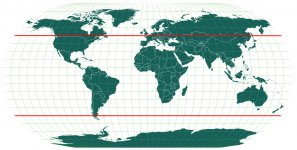
I found out this interesting graph, this is where the cannabis originally came from.

I'm very sad since i'm from canada and it seems theres no landrace from canada :(

I see it is believes there is 60 landrace originally around the world that exist, or have existed !

very interesting, think some people saved them all ?

cannabis can only grow between the 2 red line
 

Attachments

  • continental-us.jpg
    continental-us.jpg
    120.1 KB · Views: 21
Interesting so hashmaking was legal in greece but not in countries surounding it ?

Greece was a hashish-producing center from the late 1800s until Greece's golden age of hashish use during the 1920s and 1930s. Greek hashish very rarely entered the Western hashish trade. The peak period of Greek hashish use coincided with the flowering of rebetika music. Rebetika is a folk music with lyrics that often sang of hashish and that appealed to audiences and musicians who used hashish. Stefanis et al. (1977) present a well documented history of hashish in Greece:

It is probable that the cultivation of [Cannabis for] hashish [production] was introduced to Greece around 1875 by immigrants from Egypt, Cyprus, and other
eastern areas. By the last decade of the nineteenth century, hashish was openly cultivated for local use and export (Stringaris 1933). Papadopoulos (1959) estimates that before 1915, approximately 26,000 acres (more than 10,000 hectares) in Greece were put to hashish cultivation.


O n March 27, 1890, following a decision of the Medical Council, the Greek Department of Interior issued a circular prohibiting the importation, cultivation, and use of hashish as an imminent threat to society (Stringaris 1933). Despite passage of this restrictive law, in force until 1920, hashish was regularly used in the tekedes
(cafes frequented by hashish smokers), in the harbor area of Piraeus, and in the center of Athens (Petropoulos 1971)


In view of close similarities between the development of Smyrna and Syros (in Turkey), the use of hashish by the inhabitants of Smyrna cannot be dismissed. This view is strongly supported by reports that many of the Asia Minor Greeks repatriated in 1922 were hashish users.

Hashish use flourished during the decade following WWI. Greek soldiers, returning home after the war in Asia Minor, brought back hashish smoking habits
they had learned in Turkey (Couretas 1937).


During the years that followed, hashish use continued despite prescriptive legislation. The retail price was low, making it accessible to many (Vouyoucas 1971).

During the 1920s and 1930s, the highest-quality domestic Greek hashish was sieved from plants grown on the island of Syros. The best hashish available, however, was made in neighboring Turkey (also by sieving). Most of the hashish smoked in the tekes
during the 1920s and 1930s was smuggled from Turkey. The heydays of rebetika teke was short-lived. Hoist (1975) reported that by the late 1930s:


...the days of the tekes were almost over. During the war there was some relaxation of the laws against hashish, but the severe prosecutions of the Metaxas dictatorship (1936-41) had forced many of the tekes to close, and many of the smokers as well as the musicians had fled to Thessalonika, where conditions were somewhat easier. The local police chief Vassilis Mouskoudis, was a rebetika fan, and was prepared to supply musicians with hashish in order to listen to them play buzuki.

Hashish! / Robert Connel Clarke
 
I wish people with love for cannabis like me and you guys, would be able to find enough people to make a kind of collective that is focused on preserving the original landraces, maybe by popping seeds choosing the best male/female for every available landrace so to make plenty of seeds from very nice specimens of each landrace.

if only we could have seeds of the 60 landraces that exist or existed in the past, we could maybe preserve all the genome. is it too late ?

am i the only one that is crazy like that ?

it's not legal in canada so since it's one of the first country to legalize, why not establish the collective here ?

let's save the cannabis GENOME for our future and our children ! :)
 
Greece was a hashish-producing center from the late 1800s until Greece's golden age of hashish use during the 1920s and 1930s. Greek hashish very rarely entered the Western hashish trade. The peak period of Greek hashish use coincided with the flowering of rebetika music. Rebetika is a folk music with lyrics that often sang of hashish and that appealed to audiences and musicians who used hashish. Stefanis et al. (1977) present a well documented history of hashish in Greece:

It is probable that the cultivation of [Cannabis for] hashish [production] was introduced to Greece around 1875 by immigrants from Egypt, Cyprus, and other
eastern areas. By the last decade of the nineteenth century, hashish was openly cultivated for local use and export (Stringaris 1933). Papadopoulos (1959) estimates that before 1915, approximately 26,000 acres (more than 10,000 hectares) in Greece were put to hashish cultivation.


O n March 27, 1890, following a decision of the Medical Council, the Greek Department of Interior issued a circular prohibiting the importation, cultivation, and use of hashish as an imminent threat to society (Stringaris 1933). Despite passage of this restrictive law, in force until 1920, hashish was regularly used in the tekedes
(cafes frequented by hashish smokers), in the harbor area of Piraeus, and in the center of Athens (Petropoulos 1971)


In view of close similarities between the development of Smyrna and Syros (in Turkey), the use of hashish by the inhabitants of Smyrna cannot be dismissed. This view is strongly supported by reports that many of the Asia Minor Greeks repatriated in 1922 were hashish users.

Hashish use flourished during the decade following WWI. Greek soldiers, returning home after the war in Asia Minor, brought back hashish smoking habits
they had learned in Turkey (Couretas 1937).


During the years that followed, hashish use continued despite prescriptive legislation. The retail price was low, making it accessible to many (Vouyoucas 1971).

During the 1920s and 1930s, the highest-quality domestic Greek hashish was sieved from plants grown on the island of Syros. The best hashish available, however, was made in neighboring Turkey (also by sieving). Most of the hashish smoked in the tekes
during the 1920s and 1930s was smuggled from Turkey. The heydays of rebetika teke was short-lived. Hoist (1975) reported that by the late 1930s:


...the days of the tekes were almost over. During the war there was some relaxation of the laws against hashish, but the severe prosecutions of the Metaxas dictatorship (1936-41) had forced many of the tekes to close, and many of the smokers as well as the musicians had fled to Thessalonika, where conditions were somewhat easier. The local police chief Vassilis Mouskoudis, was a rebetika fan, and was prepared to supply musicians with hashish in order to listen to them play buzuki.

Hashish! / Robert Connel Clarke

nice bit of history in our big quest to find the truth about Canna.

Do anyone know what landrace was grown in greece to produce hash, was it some kind of hashplant or afghan?
 
My belief is that "skunk" smell is a mish mash of various strong terpenes. Likely too many for our receptors to differentiate very well. This way, skunk could easily rise from various populations.
 
so maybe that RKS has afghani / hashplant / pakistan afghanistan region genetics in it while sweet skunk is the skunk we all know skunk numba one with colombian gold, acapulco gold and afghani ?

i wonder if someone confirmed that indeed the skunk number 1 was the progeny of those 3 landraces. if someone smart that smoked them, growed them and can confirm it really has this genetic pedigree.

thanks for sharing guys
 
I wish people with love for cannabis like me and you guys, would be able to find enough people to make a kind of collective that is focused on preserving the original landraces, maybe by popping seeds choosing the best male/female for every available landrace so to make plenty of seeds from very nice specimens of each landrace.

if only we could have seeds of the 60 landraces that exist or existed in the past, we could maybe preserve all the genome. is it too late ?

am i the only one that is crazy like that ?

it's not legal in canada so since it's one of the first country to legalize, why not establish the collective here ?

let's save the cannabis GENOME for our future and our children ! :)

Its been done a few years back mate, there was a online collective preserving and sharing landrace cultivars that were free to the members if you preserved the seed you were given.:D
 
Its been done a few years back mate, there was a online collective preserving and sharing landrace cultivars that were free to the members if you preserved the seed you were given.:D

Nice, i wonder how many landraces have they preserved and can we buy the selections in forms of seeds ?

thanks
 
Back
Top