

lemarcel
Member
Hello everybody ! 
Here is a nice article from my friend EXO, about micropropagation.
I translated it from French to English, so it is not perfect, please tell me if you see any mistakes or meaningless words ! And I will correct them.
Micropropagation
Laboratory experimentation :
Hello,
I will try to easily explain this extraordinary technique.
- What is micropropagation used for?
Regeneration is used for regenerating whole plants from any part of them.
- Which part of the plant can we use?
All of them: a leaf, a bud, a root, a cell.
- That seems too nice, where is the hoax?
There is no hoax, this technique is used in research laboratories for a long time, and in big farms for a short while, allowing to endlessly multiplying a single plant with special characteristics.
Introduction:
In addition to recreational use of cannabis, there are some other uses like fiber production, seeds production for human food, or pharmaceutical molecules production.
This kind of application with a heavy economical cost quickly interested the researchers.
However cannabis suffers from a bad reputation, so only a few publications about it are available.
According to me, science has to be shared with all, and has not to be retained as a secret.
I will show you the most efficient technique nowadays, to obtain an impressive amount of cuttings in a very short time.
Equipment and method:
- Seeds are sprouted in a darkness place with 90% humidity for 24 hours.
- Sterilizing with Calcium Hypochlorite 5% for 6 – 8 – 15 minutes.
- Return to sprouting in aqueous solution with 3% glucose and 1% saccharose.
- Growing plants (not in soil)
- After 3 weeks of grow, plants are sacrificed.
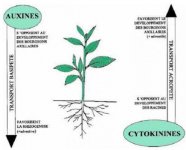
- Then we take a petiole, an auxiliary bud, an apical bud, an internode….
- Cultivation in an agar-agar box, pasteurized with an autoclave (120°, 45 minutes).

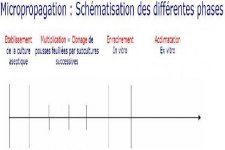
- Then, all the plants are placed in darkness for 3 weeks, at 22°C, with a hormonal balance which promotes cells differentiation in root type.
- Then we switch on the light on, with an 18/6 photoperiod, always at 22°C.
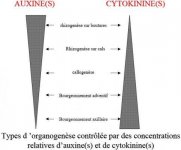
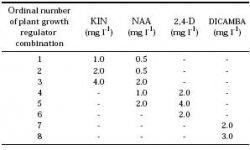
- To form the roots, regenerated plants (size = 2 cm) were cultivated on MS medium base, with 1 mg/L of IAA (Auxin), and 1mg/L of NAA. Then rooted plants were transferred in soil and cultivated in a greenhouse.
Statistics:
This experimentation used 4 explants, 5 cultivars and an average of 8 combinations, and was realized in a complete conception study (RCB), with 3 repetitions.
Effect of induction of vegetable growth regulators on the different explants (young leaves, petioles, internodes, auxiliary buds), was expressed in percentages. To know if the results were significant we used “Two-way ANOVA”, and normalized the distribution.
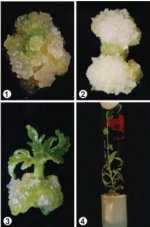
Results:
Sterilization of explants was better with shaking calcium hypochlorite solution 5% for 15 minutes.
All preparations have been regenerated into whole plants, creating lines genetically identical, but phenotypically different. Indeed from strict dioecious female plants we obtained hermaphrodite phenotypes.
However this phenomenon was controlled, leading to restoration of female phenotype.
From this point another study will be made to explain this differentiation, or how to start from hermaphrodites plants to induce a perpetual differentiation into a single sex, in an irreversible way.
Discussion:
I have to precise the best regenerations were made from petioles and leaves.
Moreover, apical bud was regenerated both in presence and absence of hormone, so it is not compulsory to regenerate it in agar-agar.
Easier Experimentation:
Today I will try to explain how you can use micropropagation without any knowledge.
On the other hand, you have to buy a bit of material, count 50€ to make 30 boxes, each of them allowing to micropropagate 3 samples.
Introduction:
This technique will allow you to regenerate a whole plant, whatever the sample used, but to make things easier, we’ll study the case of regeneration by chlorophyllous parenchyma cells of leaf. (Reducing power under the form of NADPH(2)+ for curious people)
In addition of the practical aspect to allow making thousands of cuttings identical to the motherplant by using whatever part of it, micropropagation offers a lot of other overtures, which are very exciting with a lot of surprises.
In conclusion I will explain how to cross your best motherplants and how to regenerate them, to create new plants with a vegetative and floristic potential almost infinite!
I have to say these protocols are my intellectual properties so please do not use them to make money. But the personal use of them is allowed. Thank you.
Material and method:
List of the material you have to buy:
- Vegetable scalpel
- Alcohol 90%
- A gas cooker, or a Bunsen burner (works best)
- Your plant you want to micropropagate
- A container to make micropropagation (Petri box, test tube, yoghourt box…)
- An accuracy pipette 0,1 ml
- Auxin 1 mg/L
- Cytokinin 1 mg/L
- Mineral environment: MS or Murashige or Skoog
(You easily can find all this material on the web)
Warning:
- Hormones are very sensitive to temperature (they are thermolabile), so I advise you to store them in the fridge (about 4°C), and to take them out only when you use them for experiences.
- MS and other mineral environments are sold under the form of powder, you will have to add water and heat it in a boiling bain-marie to dissolve it, but you have to be careful to maintain it at this high temperature, because when it is cold it became rigid and unusable.
- All the experiments need to be made with the most possible sterility. You have to disinfect your worktop, your hand, all your material, and then light on your Bunsen burner (white flame), and define an area of 20/30 cm around it, this will constitute your “sterility cone” where you will do your experiences. Everything will be done in this sterility cone.
Preparation of the environments:
- Sterilize your boxes with alcohol, then with a bain-marie for 5 minutes, and let them drying.
- Heat your solution (MS environment + water until the top of the bottle) with a boiling bain-marie; do not forget to let the cap open. When it is completely dissolved after 30 to 60 minutes, let cool down for 5 minutes then flow it into your boxes, on a depth of about 1 cm (conservation : 3 weeks maximum)
- You have to use at least 2 boxes / experience, in the first box add 1mg/L of Auxin (0,5 ml) + 1 mg/L of Cytokinin (0,5 ml) to create the Cals. Write MSAC on it.
In the second box, add 0,1 mg/L of Auxin (0,05 ml) + 1 mg/L of Cytokinin (0,5ml), do not forget to completely homogenize them. This box will be used to regenerate, write MSEL on it.
Sampling the fragments to micropropagate:
- Take an aluminum foil, sterilize it into bain-marie 80°C for 5 minutes, then with alcohol, and keep it in the sterile area. This foil will be used to sterilize the vegetable material.
- Take a leaf of your plant and place it between two pieces of aluminum, let in contact for 3 minutes, then cut a square with 1 cm sides, taking a sample of a part of the central nervure.
- Put the fragments on the mineral environments; seal the boxes with scotch-tape and put them into a place with 18/20 °C and under a poor light, for 3 to 4 weeks.
Results:
MSEL boxes will develop buds, from this point, add Auxin and they will make roots, then can transplant them in soil.
MSAC boxes will form heaps of undifferentiated and immortal cells, if you low down temperature to 10°C you could keep them in quiescence for years, and you could take a sample of it to make regeneration in a MSEL box.
So it is easy to keep dozens of genetics in a fridge, and to regenerate them anytime. This technique allows durability of strains and a continuous provision of cuttings of a selected interesting phenotype, to produce cuttings at infinite.
Discussion and evolutions:
This regeneration technique can also be used to create new hybrids: some crossbreeding is impossible, either because of the number of generations necessary (10 or 20 000), either because the number of chromosomes is unsuitable, either because of dominant/recessive notions, etc…
The solution is the generation of protoplasts (vegetable cells without their cell wall), and the fusion of two protoplasts from two different plants.
So we obtain a cell, with both the two genomes, expressing all the characteristics of the two plants.
In addition, these cells are at minimum tetraploïd (or a lot more), so the stock of growing and blooming hormones is double.
You now just have to regenerate these merged protoplasts with micropropagation, and you will obtain gruesomely hardy and productive plants. And you could clone or micropropagate them at infinite.
If that interest some people I will make a tutorial to succeed without any knowledge, production and fusion of protoplasts.
Some other experiences are possible but we’ll see them later.
Little supplement:
Here are some videos of micropropagation technique:
-Part I : here
-Part II : here
-Part III : here
-Part IV : dead link
-Part V : here
-Part VI : here
-Part VII : here
-Part VIII : here
-Part IX : dead link
-Part X : here
Here is the material and the way to proceed (in French, but I am sure you can find the same type of articles in English):
- here
- here
Examples of micropropagation I done with cannabis:
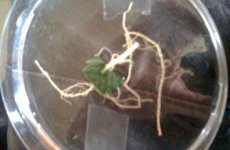
Kind Regards,
EXO
Author : EXO
Trad : leMarcel
Have a nice read ! If you have any comments or questions, as usual do not hesitate
Marcel
Here is a nice article from my friend EXO, about micropropagation.
I translated it from French to English, so it is not perfect, please tell me if you see any mistakes or meaningless words ! And I will correct them.
Micropropagation
Laboratory experimentation :
Hello,
I will try to easily explain this extraordinary technique.
- What is micropropagation used for?
Regeneration is used for regenerating whole plants from any part of them.
- Which part of the plant can we use?
All of them: a leaf, a bud, a root, a cell.
- That seems too nice, where is the hoax?
There is no hoax, this technique is used in research laboratories for a long time, and in big farms for a short while, allowing to endlessly multiplying a single plant with special characteristics.
Introduction:
In addition to recreational use of cannabis, there are some other uses like fiber production, seeds production for human food, or pharmaceutical molecules production.
This kind of application with a heavy economical cost quickly interested the researchers.
However cannabis suffers from a bad reputation, so only a few publications about it are available.
According to me, science has to be shared with all, and has not to be retained as a secret.
I will show you the most efficient technique nowadays, to obtain an impressive amount of cuttings in a very short time.
Equipment and method:
- Seeds are sprouted in a darkness place with 90% humidity for 24 hours.
- Sterilizing with Calcium Hypochlorite 5% for 6 – 8 – 15 minutes.
- Return to sprouting in aqueous solution with 3% glucose and 1% saccharose.
- Growing plants (not in soil)
- After 3 weeks of grow, plants are sacrificed.
- Then we take a petiole, an auxiliary bud, an apical bud, an internode….
- Cultivation in an agar-agar box, pasteurized with an autoclave (120°, 45 minutes).
- Then, all the plants are placed in darkness for 3 weeks, at 22°C, with a hormonal balance which promotes cells differentiation in root type.
- Then we switch on the light on, with an 18/6 photoperiod, always at 22°C.
- To form the roots, regenerated plants (size = 2 cm) were cultivated on MS medium base, with 1 mg/L of IAA (Auxin), and 1mg/L of NAA. Then rooted plants were transferred in soil and cultivated in a greenhouse.
Statistics:
This experimentation used 4 explants, 5 cultivars and an average of 8 combinations, and was realized in a complete conception study (RCB), with 3 repetitions.
Effect of induction of vegetable growth regulators on the different explants (young leaves, petioles, internodes, auxiliary buds), was expressed in percentages. To know if the results were significant we used “Two-way ANOVA”, and normalized the distribution.
Results:
Sterilization of explants was better with shaking calcium hypochlorite solution 5% for 15 minutes.
All preparations have been regenerated into whole plants, creating lines genetically identical, but phenotypically different. Indeed from strict dioecious female plants we obtained hermaphrodite phenotypes.
However this phenomenon was controlled, leading to restoration of female phenotype.
From this point another study will be made to explain this differentiation, or how to start from hermaphrodites plants to induce a perpetual differentiation into a single sex, in an irreversible way.
Discussion:
I have to precise the best regenerations were made from petioles and leaves.
Moreover, apical bud was regenerated both in presence and absence of hormone, so it is not compulsory to regenerate it in agar-agar.
Easier Experimentation:
Today I will try to explain how you can use micropropagation without any knowledge.
On the other hand, you have to buy a bit of material, count 50€ to make 30 boxes, each of them allowing to micropropagate 3 samples.
Introduction:
This technique will allow you to regenerate a whole plant, whatever the sample used, but to make things easier, we’ll study the case of regeneration by chlorophyllous parenchyma cells of leaf. (Reducing power under the form of NADPH(2)+ for curious people)
In addition of the practical aspect to allow making thousands of cuttings identical to the motherplant by using whatever part of it, micropropagation offers a lot of other overtures, which are very exciting with a lot of surprises.
In conclusion I will explain how to cross your best motherplants and how to regenerate them, to create new plants with a vegetative and floristic potential almost infinite!
I have to say these protocols are my intellectual properties so please do not use them to make money. But the personal use of them is allowed. Thank you.
Material and method:
List of the material you have to buy:
- Vegetable scalpel
- Alcohol 90%
- A gas cooker, or a Bunsen burner (works best)
- Your plant you want to micropropagate
- A container to make micropropagation (Petri box, test tube, yoghourt box…)
- An accuracy pipette 0,1 ml
- Auxin 1 mg/L
- Cytokinin 1 mg/L
- Mineral environment: MS or Murashige or Skoog
(You easily can find all this material on the web)
Warning:
- Hormones are very sensitive to temperature (they are thermolabile), so I advise you to store them in the fridge (about 4°C), and to take them out only when you use them for experiences.
- MS and other mineral environments are sold under the form of powder, you will have to add water and heat it in a boiling bain-marie to dissolve it, but you have to be careful to maintain it at this high temperature, because when it is cold it became rigid and unusable.
- All the experiments need to be made with the most possible sterility. You have to disinfect your worktop, your hand, all your material, and then light on your Bunsen burner (white flame), and define an area of 20/30 cm around it, this will constitute your “sterility cone” where you will do your experiences. Everything will be done in this sterility cone.
Preparation of the environments:
- Sterilize your boxes with alcohol, then with a bain-marie for 5 minutes, and let them drying.
- Heat your solution (MS environment + water until the top of the bottle) with a boiling bain-marie; do not forget to let the cap open. When it is completely dissolved after 30 to 60 minutes, let cool down for 5 minutes then flow it into your boxes, on a depth of about 1 cm (conservation : 3 weeks maximum)
- You have to use at least 2 boxes / experience, in the first box add 1mg/L of Auxin (0,5 ml) + 1 mg/L of Cytokinin (0,5 ml) to create the Cals. Write MSAC on it.
In the second box, add 0,1 mg/L of Auxin (0,05 ml) + 1 mg/L of Cytokinin (0,5ml), do not forget to completely homogenize them. This box will be used to regenerate, write MSEL on it.
Sampling the fragments to micropropagate:
- Take an aluminum foil, sterilize it into bain-marie 80°C for 5 minutes, then with alcohol, and keep it in the sterile area. This foil will be used to sterilize the vegetable material.
- Take a leaf of your plant and place it between two pieces of aluminum, let in contact for 3 minutes, then cut a square with 1 cm sides, taking a sample of a part of the central nervure.
- Put the fragments on the mineral environments; seal the boxes with scotch-tape and put them into a place with 18/20 °C and under a poor light, for 3 to 4 weeks.
Results:
MSEL boxes will develop buds, from this point, add Auxin and they will make roots, then can transplant them in soil.
MSAC boxes will form heaps of undifferentiated and immortal cells, if you low down temperature to 10°C you could keep them in quiescence for years, and you could take a sample of it to make regeneration in a MSEL box.
So it is easy to keep dozens of genetics in a fridge, and to regenerate them anytime. This technique allows durability of strains and a continuous provision of cuttings of a selected interesting phenotype, to produce cuttings at infinite.
Discussion and evolutions:
This regeneration technique can also be used to create new hybrids: some crossbreeding is impossible, either because of the number of generations necessary (10 or 20 000), either because the number of chromosomes is unsuitable, either because of dominant/recessive notions, etc…
The solution is the generation of protoplasts (vegetable cells without their cell wall), and the fusion of two protoplasts from two different plants.
So we obtain a cell, with both the two genomes, expressing all the characteristics of the two plants.
In addition, these cells are at minimum tetraploïd (or a lot more), so the stock of growing and blooming hormones is double.
You now just have to regenerate these merged protoplasts with micropropagation, and you will obtain gruesomely hardy and productive plants. And you could clone or micropropagate them at infinite.
If that interest some people I will make a tutorial to succeed without any knowledge, production and fusion of protoplasts.
Some other experiences are possible but we’ll see them later.
Little supplement:
Here are some videos of micropropagation technique:
-Part I : here
-Part II : here
-Part III : here
-Part IV : dead link
-Part V : here
-Part VI : here
-Part VII : here
-Part VIII : here
-Part IX : dead link
-Part X : here
Here is the material and the way to proceed (in French, but I am sure you can find the same type of articles in English):
- here
- here
Examples of micropropagation I done with cannabis:
Kind Regards,
EXO
Author : EXO
Trad : leMarcel
Have a nice read ! If you have any comments or questions, as usual do not hesitate
Marcel


