recycled soil as media

Skunkha

New member
natural terra firma is in constant support and perpetuation of plants given the area is suitable for flora

why not the "artificial soil" in our containers?:confused:

soil compaction is a valid concern to the gardener. what are some ways to recycle soil to restore friability?:confused:

what are some of the ways to reuse soil?:confused:

great idea starting the thread

what are some of the ways to reuse soil?

im curious as to some of the practices that som of the mns fam mayuse

i always thought maybe just som fresh perlite n peat moss along wit the usual organic nutrient such as dolomite lime /earthworm casting /bone/blood meal /espsom salt etc

it seems som are in favor of the practice ,i like to hear som more experiences and methods


1luvbigherb
 
Great subject for a thread.. also be nice to see some mixes ingredients and ratios here for new soil.. i recently made up a batch of soil the ingredients arent to awefully expensive to mix your own and re-use\recycle afterward after looking at several mixes and places online i ended up just using the recommended amounts of all the ingredients per sq\ft of dirt or neutral medium

alot of people buy the foxfarm soils i personaly have never used them but assume they are expensive? and probably unavailable to me in my rural area here

as for the re-using only problem i can see would be with maybe salt build up from the use of alot of ferts near the end.. might lead to over feeding or ph problems or nute lockout of certain elements because of ph. there is probably a re composting method that would help? interesting topic for sure.every one wants to save time and money
 
Last edited:
Well, I haven't used the recipe, but I have used almost every other recipe on the list so far, and they have all worked out rather well. Taken from ICMAG Organics For Beginners originally posted by user BurnOne (not taking credit, merely spreading the word!):

RECIPE #4
Three Little Birds Method
40 gallons used soil
4 cups alfalfa meal
4 cups bone meal
4 cups kelp meal
4 cups powdered dolomite lime
30 pound bag of earthworm castings . . .
That’s the basic recipe . . .
However we also like to use
4 cups of Greensand
4 cups of Rock Phosphate
4 cups of diatomaceous earth

As said before I haven't used this exact recipe yet--but I can vouch for LC's Soilless Mix #1 and #2 as well as the fertilizer regimen for #1(Bone, blood, kelp), #3(Guano Teas), and #5 (Fish emulsion, kelp, etc) all of which are good jump-off recipes listed on the before mentioned thread. Both #1,3, and 5 start with fresh soil instead of used soil though, so I cannot vouch 100% for their efficacy--but judging by how much other users like the recipes they seem pretty darn good.

I've heard certain users swear by reusing soil for as many as 2 to 3 harvests. I've also heard opposing views of users who never use already used soil--I remember a certain user (I believe VerdantGreen if my memory serves me correct) over on IC only uses his soil once, but then introduces the used potting soil in his vegetable and flower gardens. No personal experience with reusing soil yet--but I can offer a couple tidbits of knowledge that's out there. I will be reusing my soil though in another 2 months after my next harvest (finally got 20+ gallons of used soil saved up) and will then be able to say without a doubt how I enjoyed growing in already grown in medium.

I'd love to hear what everyone else has to say as I too am new to the avenue of reusing soil.

HolyMountain
 
Last edited:
pro soil sterilization

this is something touched on in the other thread:

[disclaimer: only an interested amateur ]:D

"oh the poor dears" (microorganisms) "they are so beneficial":rolleyes:

why kill them off?

1. because their work is done
a. plants use the "after components" of the critters: nutrients transfer occurs at an ionic level

b. we are seed propagators: probably the most critical time in a seedplant's life is germination. some rare and old seeds may need a sterile nursery.
​
2. the soil may be reinoculated prior to planting with mychorrizae (sp.?) or custom blend of microflora: the many commercial products available
 
contra blood and bone

yes, blood and bone are a cheaper alternative to premium natural fertilizers, but consider:

1. the plant's requirements: cannabis is in the "rank of plants" an herb. these are leafy and non-fruiting.

blood and bone meal are fairly potent and are better for vegetables like tomatoes, eggplant, squash which have higher fertilizer requirements because of large fruits.

2. blood and bone are "longer-acting" than the time of a typical cycle of Cannabis: possibly resulting in an inability to flush plants adequately.

​
 
Mix It In With Your Compost;)
Dumping Old Perlite Rich Soil On Your Outdoor Garden Can Sometimes Attract Attention From Above .
I Always Suffer Lower Yields From Using Recycled Soil Even Though I Use Cannazym And Bio Pac Religiously.
Peace
JKP
 
If you've got an old bean bag that has lost its 'fluff'
you can fluff it back up, but...
it only looks fluffy until you sits in it again.

But I'm not here to knock what works for anybody - if your doing it, and its working for you, then by all means you keep right on doing what it is your doing, which is, IMO, a best practice (repeat what works for you).

A couple sq ft of foxfarm in my neck of the water will run you about $50, and if I were forking out that kind of dough for a grow medium, I couldn't afford not to re-use it.
 
Three Parts New To One Part Old

I Have Read From Bio Bizz That You Can Revigourise Your Soil By Adding It To One Bag Of Old Media Mixed With Three Bags Of New Media
However The Risk Of Any Insect/Fungal Problems Could Be Drastic
I Do Reuse My Indoor Soil For Outdoor Grows However ( In Tubs )
But I Have Only Recently Started To Use Fresh Allmix Again And Am Noticing How Happy My Plants Are Growing In It.
Long Gone Are The Days Of Renting A Electric Cement Mixer And Making Up A Soil Mix Using Several Bags Of Sunshine Mix #3
Anyone Know If Plagron Light Mix Is As Good As Bio Bizz Alllmix ?
JKP:)
 
Skunkha thanks for posting this thread:D

I dont reuse compost because i use inexpensive(cheap)stuff but still works fine, I add rockdust(handful to 5L of compost) and inoculant.
If i was going to recycle i would sieve out any root matter and add rock dust and innoculate again.
wormcast, seaweed or guano's in some form will help, but u need to let it 'cure' for afew weeks.

Like holymountain said, iv read of a grower recycling compost 3 times so using it 4 times overall, second and third, yeild was up on the first but down on the 4th run. if i remember right it was Biobizz allmix
as mentioned above, i think its the build up of salts and lack of others things over time which decrease health. RO or rain water might increase the no. of grows you could get from a bag but thats only speculation.
 
Last edited:
greensand

Skunkha thanks for posting this thread:D

I dont reuse compost because i use inexpensive(cheap)stuff but still works fine, I add rockdust(handful to 5L of compost) and inoculant.
If i was going to recycle i would sieve out any root matter and add rock dust and innoculate again.
wormcast, seaweed or guano's in some form will help, but u need to let it 'cure' for afew weeks.

Like holymountain said, iv read of a grower recycling compost 3 times so using it 4 times overall, second and third, yeild was up on the first but down on the 4th run. if i remember right it was Biobizz allmix
as mentioned above, i think its the build up of salts and lack of others things over time which decrease health. RO or rain water might increase the no. of grows you could get from a bag but thats only speculation.

Jersey Greensand has become unavailable in my locale ... i settled for "Texas Greensand" anyone with experience with the different ones? the values, I heard, are comparable:confused:
 
thanks ironeddie

some interesting facts from ATTRA on organic guidelines and other very useful info......http://attra.ncat.org/attra-pub/potmix.html#ingredients


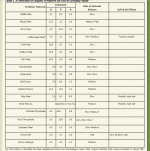
very interesting table breakdown of organic ferts

thanks for the link:)

in it they mentioned the mad cow issue which was the "turning point" for me on their use besides what was stated in my previous post.:eek:

the table you listed is different from materials from my area's local extension service. specifically guanos all the materials which i have looked at have the guanos as "fast acting". yes, they also structure the soil for lasting benefit, but their primary action was reported as "very rapid" (some).
 
a caveat

the type of plants grown and fertilizer regimen will influence whether soil should be used again for those considering the practice.

for instance: for a period of about 3 years i worked almost exclusively with O. Haze, Malawi Gold, Ethiopian Highland, Durban (Sensi Seeds), and Swazi Skunk. these strains eschewed ferts. and all grows were purely reused organic soil.:cool:

growing hybrids requires higher inputs and i have now started to use Terra Vega which will no doubt compromise my reuse of soil. i don't know how much it will affect things, but, for sure, the soil will not be as pristine as before.:o

so for any contemplating a reuse of soil, all factors need to be considered.;)
 
True Living Organics

Man o man, you guys got me itchin' to spit out soil info. I'm new to this forum. I am usually on the skunk mag forum where True Living Organics is all the rage...and for good reason(increased flavors, potency, legs).

Anyhow, recycling soil is very possible and highly recommended under the right circumstances as stated before in this thread. If you are using any liquid nutes other than Fox Farms Big Bloom, a few by Roots Organics, and stuff like liquid fish/kelp/guano it's not a good idea to recycle cuz those synthetic salts in the nutes build up in the soil over time which can cause problems. With TLO growing, the soil gets better over time as nutrients get broken down.

Bone and blood meal happen to be great additions to an organic grow. By organic, I mean all of the bacteria and fungi, and other microorganisms that live in healthy soil without synthetic chelating salts that will kill them. These microbes are what feed the plants the way mother nature designed. It's true, some of them need to die to feed the plants, but not all of them. There are natural cycles of population explosions and population deaths. This is why it is a good idea to use a compost tea once in awhile to reintroduce fresh supplies of microbes to the soil.

I have started seeds and cuttings in my full-strength organic mix without problems....however, results may vary(i don't want to be responsible if this does not work for someone else). In this system, the nutrients are only available through the microbes, so the plants don't get burnt.

Mycorrhizae innoculants are for promoting root health. When they become activated in water and find roots, they attach themselves and effectively extend the nutrient delivery system to the roots.

With TLO, there is no need to add liquid ferts. Just water with RO, distilled, or rain water.

Here is a soil recipe that many over at Skunk mag follow with fantastic results. It is from Rolan Terroy, the cultivation editor of skunk.
http://skunkmagazine.com/forum/index.php?topic=7923.msg134307#msg134307

Master Soil-Mix Recipe

MIX TO BE USED WITH PURE WATER SOURCES ONLY NO TAP, SPRING, OR WELL WATER

BASE MIX

2 gal Ocean Forrest (or good organic soil mix)
2 gal Coir (coconut fiber)
2 gal Perlite (small nugget size)
2 gal Castings (earthworm castings, or fresh compost works too)

AMENDMENTS

1.5 cup All Purpose or Bloom (Organicare Pure) OR 1 cup 5-5-5
1 cup Greensand
1 cup Ground Oyster Shells
2 cup Crushed Oyster Shells
½ cup (heaping) Powdered Dolomite Lime
½ cup Prilled (pelletized) Dolomite Lime
½ cup Blood Meal (or High N Bird Guano 12-8-2 NPK if flowering)
½ cup heaping un-steamed Bone Meal
¾ cup Bulb Food (3-8-8)
½ cup Soft Rock Phosphate powdered
1 cup Gypsum powdered
1 cup Kelp Meal

½ cup Zeolite or Azomite granular **optional
½ cup Humate granular **optional
1 cup Alfalfa Meal (or 2 cup pellets) **optional
1 cup Rock Phosphate Granular **optional
1 cup organic rice **optional

FLOOR: Steer Manure + Coir/Perlite + Crushed & Ground Oyster Shells

SPIKES: Blood/Feather Meal + Ground Oyster (+ Steamed Bone Meal and Bulb Food added if flowering) and kelp or alfalfa meal.

This mix should be moistened (Do not get it soaking wet!) with chlorine free water, and turned over every few days, for about 7-10 days before use. This is what I call “cooking” your soil, and letting it get pretty dry before use, is fine. The nutrients don’t evaporate or anything, so no worries there, per storage over time.
And here's a quote on soil recycling by Rolan.
="http://skunkmagazine.com/forum/index.php?topic=7923.msg134307#msg134307"
Ummmm... I can't remember how long it took them to ship. Sorry amigo.

Here's the thing you should start out doing I think...

Just recycle all the roots, plant matter, alfalfa if you have some, kitchen scraps, you know, organic matter. Then, if you had say 16 gal (US DRY MEASUREMENTS) of this soilmix. I would add about 1 cup of greensand, 1 cup of blood meal, 1 cup of powdered dolomite lime, 1 cup of all purpose 5-5-5 or whatever, just make sure the last NPK number (K) is high. Plus about 1/4 - 1/3 cup of SRP powdered.

Just keep that moist and turned once a week or so. It should be done cooking within 30 days. Then, you can treat it just like you would Ocean Forest in my 2.0 mix and see how that plays out for you. Anything you run shy of you just up your additions next time around.

See bruddah, there's no perfect mix I can give that would work for everyone exactly the same, because there are a lot of variables involved, from grow to grow. But damn stinking close heh heh ;) so expoect to do a little observational dialing in and you will rock and roll! :)"

- REv

On the matter of soil compaction, if there is enough perlite in your mix you will not have to worry about compaction. It is good to add more perlite to recycled mix because the bacteria break it down over time.

There is a learning curve involved with this style of growing, but it's short. After the soil is mixed and cooked, JUST ADD WATER. Two points I want to bring up before I finish this long-winded post. Always water twice to make sure there are no dry spots in the soil. Very important! Just water lightly first with RO, distilled, or rain water.....wait 30 mins to an hour or more, then water again with water or compost tea. The other important thing is soil pH. Microbes have a wonderful way of naturally regulating soil pH, but you wanna shoot for 6.0-6.5 before anything gets planted in it.

Thanks for letting me post this stuff. It works great and I get excited talking about it.

I love this forum and would really love if peeps here starting getting into the TLO. It is truly a smoke in a league of it's own. Exquisite flavors, exceptional smoothness, and super-potent herbs.

Peace,

G4G

P.S. I modified the soil recipe by using 240mL B.L.O.O.M. #1 fertilzer/28L of soil instead of all the dry ingredients rolan uses. I find it to be working out very well.
"http://www.soilminerals.com/BLOOM1_AllVegetablesMix.htm"/BLOOM1_AllVegetablesMix.htm

 
Last edited:
i have never reused 100% old soil but i have mixed 20 % old soil and garden lime with coco with good results. feeding full coco feeds indoor and home made organic feeds for outdoor plants.
 
I have not used soil in quite a long time. When I did, I experimented with using 100% used flushed soil with very poor results. I then tried 50% used flushed soil with slightly better results. My experiment was over, and I never again re used soil.

I was not an organic farmer though, I imagine reusing certain organic mixes, possibly adding fresh materials might be completely different.

I did experiment a little with organics, but the bugs seemed to like the stuff too much.
 
Yeah, I don't know anything about recycling a non-organic mix. With true organics, the fungi and bacteria do alot of the recycling work. They're constantly breaking down nutrients and regulating pH. I would think nutrient imbalances would be harder to assess and fix without organics.
 
Back
Top