Fish
2023 COE Winner
They’ll get less and less thirsty closer to their end

They’ll get less and less thirsty closer to their end

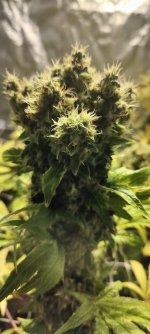
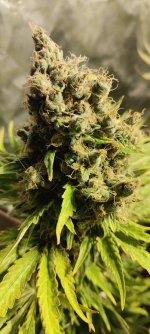
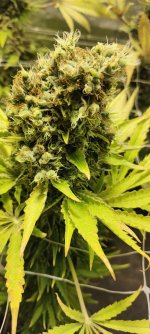
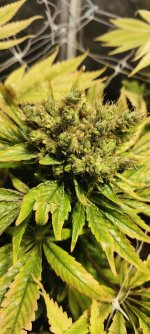
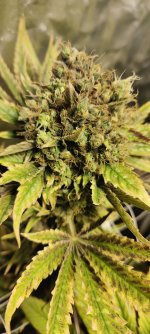
I use a soil moisture meter like this and water if needed.Guys I have a doubt. I have 4 plants that have been drinking less since a few waterings and are the most advanced. Would you just give them water or wait? They have been flowering for 6 weeks but almost 8 to 12/12

 kit.


So this is an old school way of knowing when the plants are ready, when they stop drinking they are letting you know they are ripening to perfection.Guys I have a doubt. I have 4 plants that have been drinking less since a few waterings and are the most advanced. Would you just give them water or wait? They have been flowering for 6 weeks but almost 8 to 12/12
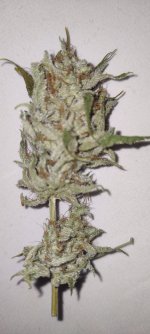
I had 13 plants and 2 weeks ago I cut 6. They are drying on a drying net. In a small room inside a dark house with a window slightly open without a door and with an extractor fan, but I turned off the extractor after a week. I don't have a thermo-hygrometer here, but come on, we're in winter, the maximum will be around 15-20 and the minimum will be about 10. Ya, it's very curious, you see the bud or the plants and you don't believe that that's nothing. But it struck me that he barely smelled the closet. It has always come out the same and I don't know why. It doesn't matter if I have watered them less or more, less or more fertilizer, insecticide stains, heat or cold, one light or another, different cabinets and pots... even with pests... I have always had the same result. Even with different varieties, they have all turned out exactly the same. Perhaps the only common thing was the fertilizer but I am with you that it cannot be that it makes this mess. The fertilizer is a special one for cannabis but not from a brand as well-known as others.So this is an old school way of knowing when the plants are ready, when they stop drinking they are letting you know they are ripening to perfection.
How did you dry it @Salva ? I am also as surprised as Mu, it looks nice and sparkley. NHS is a legendary strain.
I haven't gone through your thread yet to see what fertiliser you are using, but it does make a difference, but not enough to make a good strain bad. Don't give up on the growing. My non growing friend told me that I still have loads to learn after my second run in. I was like yeah yeah yeah. 2 years on and I am still learning everyday. My first MNS grow was shark shock- would recommend that if you have beans for it, easy to grow and a really good all arounder.

Don't know what to say Salva, that sample looks great.I had 13 plants and 2 weeks ago I cut 6. They are drying on a drying net. In a small room inside a dark house with a window slightly open without a door and with an extractor fan, but I turned off the extractor after a week. I don't have a thermo-hygrometer here, but come on, we're in winter, the maximum will be around 15-20 and the minimum will be about 10. Ya, it's very curious, you see the bud or the plants and you don't believe that that's nothing. But it struck me that he barely smelled the closet. It has always come out the same and I don't know why. It doesn't matter if I have watered them less or more, less or more fertilizer, insecticide stains, heat or cold, one light or another, different cabinets and pots... even with pests... I have always had the same result. Even with different varieties, they have all turned out exactly the same. Perhaps the only common thing was the fertilizer but I am with you that it cannot be that it makes this mess. The fertilizer is a special one for cannabis but not from a brand as well-known as others.

I don't know what to say or what to do either. It's incredible. This topic has me very crazy. The only thing I can think of is to change the fertilizer or even put in some larger pots, 20 liters I had thought. Well, I just bought the Canna line. With its famous Terra Flores, Terra Vega, Rhizotonic and the PK 13/14 that came with the starter kit. I was between Canna Plagron and Biobizz but in the end I opted for Canna simply because of the diffuser it has. The water I give them is mineral bottled water with an EC of 0.5. I have always smoked them after drying, which is about 10-15 days after cutting. It is also true that it was exterior and was excellent at that time. These indoors a month later are the same. Greetings.Don't know what to say Salva, that sample looks great.
If you give it a go again I suggest using the Plagron line.
I have for many years now I can vouch that it gives quality.
Plagron Light Mix
Plagron Alga Grow
Plagron Alga Bloom
Plagron Green Sensation
Follow the schedule but I always give 1/2 of grow and bloom unless I see that they need it.
This with HPS is a killer combo and always delivered for me for many, many grows in the past.
I would also check my water source (you can ask the water company for a report on the components).
Can't believe that it would be that but I would check erverything.
Another thing, I dont smoke or vape samples after 2 weeks of drying yet.
For me they are, in that time frame of the drying process, usually more foul smelling, kinda like grass/ hay and ammonia.
However in times of need I have done this and I found that the taste is shit but it almost always gave me a more or less ok high.
Greetings.

I'm with Swifty on this one. Unless I'm out, I don't like to smoke something which is only a few weeks post chop. The flavor is typically foul and the smoke harsher. Without a proper cure, only my best phenos properly grown, "flushed", and dried taste good after a two week dry. The rest need at least a month if not 3, to allow the flavors to come through. The longer cures tend to help the high/stone, as well.Another thing, I dont smoke or vape samples after 2 weeks of drying yet.
For me they are, in that time frame of the drying process, usually more foul smelling, kinda like grass/ hay and ammonia.
However in times of need I have done this and I found that the taste is shit but it almost always gave me a more or less ok high.

I don't know what to say or what to do either. It's incredible. This topic has me very crazy. The only thing I can think of is to change the fertilizer or even put in some larger pots, 20 liters I had thought. Well, I just bought the Canna line. With its famous Terra Flores, Terra Vega, Rhizotonic and the PK 13/14 that came with the starter kit. I was between Canna Plagron and Biobizz but in the end I opted for Canna simply because of the diffuser it has. The water I give them is mineral bottled water with an EC of 0.5. I have always smoked them after drying, which is about 10-15 days after cutting. It is also true that it was exterior and was excellent at that time. These indoors a month later are the same. Greetings.

some really solid advice here.intrigued by your cultivation, I took a quick look at your threads. First of all, congratulations, regardless of the results, there's nothing more beautiful than taking care of a plant and producing your own medicine, so you're definitely on the right track. However, I feel I should give you a few tips.
In addition to monitoring VPD, temperature, etc., I recommend starting with a simpler approach to cultivation.
The first thing you should do is get much larger final pots, ideally rectangular fabric pots, such as 100x30 or 120x60. Of course, you will grow more plants per bed (there’s nothing wrong with growing in smaller pots, but the difficulty increases exponentially—you need precise irrigation and feeding, as well as control of temperature, etc.. with smaller pots, the soil will experience more temperature fluctuations, there will be less surface area for air exchange, and it will stay humid, causing issues like spots and unhealthy plants, I'm simplifying it as much as possible).
Buy good-quality soil, Canna Bio Terra Plus is perfect, and Bio Bizz will work just as well. Use a 50% Light mix and 50% Allmix.
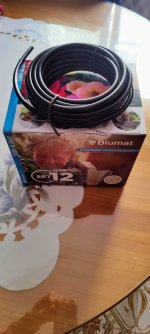
Get a Blumat drip irrigation system. It’s not that expensive, and if you take care of it, it will last for years. Just make sure you set it up correctly and follow the instructions. This simple system will help you a lot.
Put aside your EC meters and the fertilizers you're currently using, or the ones you've already bought. Store them in a cool, dark place—they won’t expire, don’t worry, and you can use them again in a few cycles if you want to get into more precise farming.
Instead, buy a complete organic fertilizer in powder or pellet form. Bionova Profimix NPK 5-4-7 + 2 MgO, Aptus All-In-One pellet NPK 6-5-13 + 2 MgO, 10SO, if you want to stick with industry brands, or you can go straight to the source with Compo Bio NPK (M-S) 6-5-13 (2-10). You can find it in hobbyist-sized packages, and yes, it’s the same product Aptus sells with all those good L-amino acids, but at a fraction of the price.
Start with 10cmx10cm pots for seedlings. Once you see roots coming from the bottom, transplant directly into the larger pots/bed. When transplanting, do a top dressing with the organic fertilizer—follow the dosage on the label, but 50-100 grams per plant should be fine. It’s roughly a handful of pellets. If you're too light on the dose, you may need a second application (these pellet-based organic fertilizers last 8-12 weeks).
That's it—don’t do anything else. Don’t fertilize them with other things, don’t give them anything else. If you really want, you can use mycorrhizae during transplanting and do a few sprays with seaweed or calcified algae, or a top dress with a handful of vermicompost (don’t mix it with the soil and definitely not in large amounts like 20%—you can only use such high percentages with proven-quality composts and certain types of peat). For now, stick with BioTerra Canna, which is a really good mix.
Of course, make sure your irrigation system is working properly—correct dripper amounts per square meter, etc. Feed the system with water that’s ideally around pH 7. If it’s around 7.5, that’s fine, but if it’s higher, above pH 8, I would lower it. I don’t think you have tap water that's much below pH 7; if it’s slightly lower, that’s still fine. Just keep in mind that microbes can lower pH, but they can't raise it, so stay close to 7.
See how it goes with this approach, and after your first cycle, you can get some gypsum, calcified algae (lithothamnion), or calcium carbonate to amend the soil… but we can talk more about that later.
intrigued by your cultivation, I took a quick look at your threads. First of all, congratulations, regardless of the results, there's nothing more beautiful than taking care of a plant and producing your own medicine, so you're definitely on the right track. However, I feel I should give you a few tips.
In addition to monitoring VPD, temperature, etc., I recommend starting with a simpler approach to cultivation.
The first thing you should do is get much larger final pots, ideally rectangular fabric pots, such as 100x30 or 120x60. Of course, you will grow more plants per bed (there’s nothing wrong with growing in smaller pots, but the difficulty increases exponentially—you need precise irrigation and feeding, as well as control of temperature, etc.. with smaller pots, the soil will experience more temperature fluctuations, there will be less surface area for air exchange, and it will stay humid, causing issues like spots and unhealthy plants, I'm simplifying it as much as possible).
Buy good-quality soil, Canna Bio Terra Plus is perfect, and Bio Bizz will work just as well. Use a 50% Light mix and 50% Allmix.
Get a Blumat drip irrigation system. It’s not that expensive, and if you take care of it, it will last for years. Just make sure you set it up correctly and follow the instructions. This simple system will help you a lot.
Put aside your EC meters and the fertilizers you're currently using, or the ones you've already bought. Store them in a cool, dark place—they won’t expire, don’t worry, and you can use them again in a few cycles if you want to get into more precise farming.
Instead, buy a complete organic fertilizer in powder or pellet form. Bionova Profimix NPK 5-4-7 + 2 MgO, Aptus All-In-One pellet NPK 6-5-13 + 2 MgO, 10SO, if you want to stick with industry brands, or you can go straight to the source with Compo Bio NPK (M-S) 6-5-13 (2-10). You can find it in hobbyist-sized packages, and yes, it’s the same product Aptus sells with all those good L-amino acids, but at a fraction of the price.
Start with 10cmx10cm pots for seedlings. Once you see roots coming from the bottom, transplant directly into the larger pots/bed. When transplanting, do a top dressing with the organic fertilizer—follow the dosage on the label, but 50-100 grams per plant should be fine. It’s roughly a handful of pellets. If you're too light on the dose, you may need a second application (these pellet-based organic fertilizers last 8-12 weeks).
That's it—don’t do anything else. Don’t fertilize them with other things, don’t give them anything else. If you really want, you can use mycorrhizae during transplanting and do a few sprays with seaweed or calcified algae, or a top dress with a handful of vermicompost (don’t mix it with the soil and definitely not in large amounts like 20%—you can only use such high percentages with proven-quality composts and certain types of peat). For now, stick with BioTerra Canna, which is a really good mix.
Of course, make sure your irrigation system is working properly—correct dripper amounts per square meter, etc. Feed the system with water that’s ideally around pH 7. If it’s around 7.5, that’s fine, but if it’s higher, above pH 8, I would lower it. I don’t think you have tap water that's much below pH 7; if it’s slightly lower, that’s still fine. Just keep in mind that microbes can lower pH, but they can't raise it, so stay close to 7.
See how it goes with this approach, and after your first cycle, you can get some gypsum, calcified algae (lithothamnion), or calcium carbonate to amend the soil… but we can talk more about that later.