Cold Presset hash ?

  • Thread starter Thread starter hempy
  • Start date Start date
hi every one and thanks read a little will read the rest soon.

Hiya shanti that makes sense i rember reading a friends book on hash makeing in the erly 80s that had the leb hash makeing wich was dry siveing threw diffrent sized metal sives and then they comprest it in to cans.

It also had hash oil metheds and it had a section on hand rubbing and rolled hash and also they had a method of makeing block hash by useing a presure cooker.

I think the best hash i every smoked that was not laced with opium was from asia hands down be it india or other parts in asia and a lot did have a brown to Grey centre infact but must admit i smoked this leb blonde in 79 that was over the top.

All the hash i make now is from resin on my hands from triming poor mans hash as i call it still great to smoke but just little of it.

Think this is the method im going with thanks mate sounds perfict.
 
I forgot to say that the color of the hash depends upon the strain somewhat. Maroccoan hash is done this way and is dark brown, Nepalese is put inside rubber tubes and buried and goes black...Since there is always higher ratios of CBD to THC in hashish it could also have alot to do with this also.

And THC as it breakdown does not go to CBD as we once postulated but it goes to CBN...which does not really do anything worthwhile. CBD high levels are not really found in plants but we have discovered CBD to be very useful in medical ailments , so hashish is a good way to combine both THC and CDB to get something that rarely grows in such ratios naturally.

All the best Sb

Shanti,

You posted that hash has higher CBD to THC ratio than herbal cannabis. This is a common misconception and not the real case.

Why would hash have a higher ratio ? There is no reason whatsoever why hash would contain a higher CBD to THC ratio than the herbal cannabis the hash was made from , since the CBD/THC-containing resin glands the plant held..make up its hash. Hash only has more THC and CBD quantity wise than the herbal cannabis the hash was made from but the ratios are the same.

The reason this myth was created was due to published results from research studies like the one from UK , that was conducted by the Home Office on 'cannabis potency'. What they forgot to mention was that they compared import hash samples to new world hybrid strains' herbal cannabis samples. Strains like those from Morocco produce a high CBD to THC ratio which is almost 1:1 (~7:10) , while hybrids like 'Skunk' produce very little CBD and a lot of THC and the ratio is much lower.

So in these studies they basically they were comparing two different products , from different strains that produce different CBD to THC ratios in the first place...and thats how the myth that hash has a higher THC to CBD ratio was created. If you measure the ratios in herbal cannabis and then make hash out of it and compare the ratios you 'll see it will be the same.

l33t
 
Hi

When you test a single plant you take a 1gram sample and do the tests for the specific cannabinoids, since there is mainly plant fibre in the sample you get a reading of normally 10% THC and .5% CBD...

However when you test a hash sample of the same weight you are testing firstly a cross section of the entire population and secondly without any plant material. I thought you might be able to work it out L33t, considering you are well up on most things?

Just so you do not need to take my word, I will ask Admini to post some independent results to show CBD is usually higher in some hash samples than in cannabis...hope that you are now enlightened! All the best Sb
 
Hi Shanti

When you test a single plant you take a 1gram sample and do the tests for the specific cannabinoids, since there is mainly plant fibre in the sample you get a reading of normally 10% THC and .5% CBD...

However when you test a hash sample of the same weight you are testing firstly a cross section of the entire population and secondly without any plant material. I thought you might be able to work it out L33t, considering you are well up on most things?
I never put much thought about CBD to THC ratios in 'hash VS herbal cannabis' up till yesterday after I read your post. I found what you said about interesting, so I did some research on it. I was surprised to find that this is not the case tho and the answer was simple and obvious, why would hash have higher CBD ratio since both THC and CBD are both found in the drug producing glands and not elsewhere in the plant? THC & CBD are both not being found in plant matter, only in these glands. And these structures are what hash is comprised of. The ratios would only change if THC and CBD were found in different parts of the plant in whole or partially and thus when hash was made some of these some parts were excluded from collection..resulting in changed ratios found in hash..but this is not the case.....so allow me to still strongly disagree with you on this... Heres one of the articles that support my claim and explain why its a misconception that hash has different THC:CBD ratios than herbal cannabis....its all about them using different strains for hash n herbal cannabis in such tests.http://pr.cannazine.co.uk/200901308...is-and-the-lisleading-concept-of-potency.html one sentence from the article that sums it up all nicely: ''the THC/CBD balance of “traditional” hashish is very different to that of some herbal cannabis on sale in the UK.''
Just so you do not need to take my word, I will ask Admini to post some independent results to show CBD is usually higher in some hash samples than in cannabis...hope that you are now enlightened! All the best Sb
Please show me any study you can find showing that hash always has higher CBD to THC ratio than herbal cannabis as you claimed earlier , but make sure this study was conducted properly for this, stating what samples exactly they used. The hash used in such a test must be made made from the same herbal cannabis as the herbal cannabis also tested for ratios , same strain , same clone. If you don't do that you are basically comparing apples to oranges and you won't get the right conclusions..I think thats pretty obvious. Such a test is easy to do with clones. If you have found a study that measured the ratios on herbal cannabis and hash made from the same herbal cannabis and it shows higher CBD to THC ratio in the hash I 'd love to see it...
''Since there is always higher ratios of CBD to THC in hashish it could also have alot to do with this also.''
''so hashish is a good way to combine both THC and CDB to get something that rarely grows in such ratios naturally.''
Initially you wrote that hash has always higher ratios than herbal cannabis. ...This is simply not the real case.
If you had said initially that random hash samples measured in certain studies have a higher CBD to THC ratio than random herbal cannabis samples , then I wouldn't have disagreed as this in some cases can be true...It all depends on what strains/samples you use. If you compare Skunk herbal cannabis to Moroccan hash you 'll get results similar to the UK Home Office studies (hash having higher CBD:THC ratios). But then the conclusion from such a study doesn't mean that hash has always higher CBD:THC ratio than herbal cannabis.. Hash has higher CBD:THC ratios only if the herbal and hash samples come from different varieties,..only if the hash is made from a strain that already has higher CBD to THC ratio in its herbal cannabis form (before the hash is made) and then this hash sample is compared to herbal cannabis with lower CBD:THC ratio. But if you compare sample from the same strain for example Moroccan herbal cannabis to Moroccan hash you 'd see the ratios are the same.
So to sum up , yes hash in practice in some cases can have higher ratios (like many studies show) but only when you're comparing different strains like Moroccan in hash form and the herbal cannabis is from new world strains....

But no hash doesn't have always higher CBD to THC ratios , in fact hash has the exactly same ratios as the herbal cannabis it was made from. And so, making hashish is not a way to combine both CBD and THC to get something that rarely grows in such ratios naturally , if you want higher CBD to THC ratios in your hash or flowers you need to find and use a different strain that produces such a high ratio in the first place , in its herbal form.
 
Last edited:
Hi L33t and All

Well done on doing your research and I always respect people who wish to support their theory with some evidence.

However let me clear up a few things for you so you do not misunderstand my initial post.

Hashish is not always higher CBD to THC ratio...but certain Hashish grown in certain areas are. Hashish cannot be made without growing cannabis first, so of course different areas of the world have different landraces and plants adapted to the particular environment. That is why to date we do not get Skunk hashish made in all countries of the world...it still relies on the bulk seed of land races .

With selective breeding it is possible to find individual plants that are higher than Hashish on the CBD:THC ratio...that is a fact as I work with some. But they are an exception not a rule, so very difficult to count on . Whereas Hashish is made from an entire harvest and is probably a better barometer of average ratio of a seed that is grown than sampling an individual plant grown in the same area.

In front of me I have a list of all the samples tested by Canna Lab at the last Spannabis show in Barcelona. It is not mine to reprint here but from what I have analysised it shows that all the Hash samples had way higher ratios of CBD to THC than individual strains. I know it is not a big sample only 57 different analysis but it is real and independent growers and users who gave their samples in to get checked.

The science of this plant is far from complete. Strains do count for the majority of traits, that is foresure...but climate, UV light, Co2, wind soil, microbacteria of the earth...and so on do effect those plants of the same genetics.

One last thing I can say to you all, never say never...as often enough you will be proved wrong once we can measure things we did not know was even there yesterday. Science is dynamic and evolution is alive so trying to keep something so vibrant still to work out if it is this or that will at best be a good thermometer for that moment but maybe wrong later. All the best Sb
 
Stone age

For a plant that has gotten so much human interest, scientific knowledge on the biological/pharmacological side is negligible. Plenty of frontiers to be pushed back by serious heds. More questers, less jesters. It is sad to see how rare is the rigour and application is that Shanti brings to the table.
Shanti College? BabaTec? Where to even go?
 
hello peep's!,
I think the best way to prove this is!!!.

Shanti, L33t and "Myself" to hook up somewhere and totally go through the process from start to fininsh once or three times!!!.:p

hee hee!.:D


Er Shanti?, you must have some fine stash?!. Go on show and tell?. :eek:


#
 
i always thought resin had higher CBD than THC because of the hash making process brakes the trichomes when the trichomes are broke the THC degrades to less psychoactive compounds CBD's CBN's ect.. If you have a pick of 1/2 walters from a bar try to dig out the fucker that is from the middle of the bar;):D
 
heya

interesting thread here, I like it when it gets hot about content and not about people going personal ;)

Some time ago I did post on this topic:
http://www.mrnice.nl/forum/showpost.php?p=11151&postcount=13

There is no doubt that, tested on a standard gas chromatograph (GS), almost all strains out there have the similar cannabinoid profile: 10% to 15%THC and below 0.5% CBD.

It also true that industrial hemp, varieties grown for seed or fiber production, has an average of 3% to 4% CBD and traces of THC (below 0.3% otherwise its illegal, though sometimes the sun & optimal growing conditions do THC-miracles even on selected varieties that receive EU subsidies). The Himalayas are also rich of both THC and CBD wild species of cannabis (jungly, for the ones that already got their hands dirty...) and in fact most of charas and afghan hash tested was indeed very rich in CBD.

CBD smoked alone is not psychoactive, but CBD will alter the effect the psychoactive effect THC. In general one could say that CBD calm down the euphoric, head spinning effect of THC by itself and would tend to actually get people more relaxed.
CBD is being proven a miracle molecule by researchers in the last years, that have been discovering its properties that range from antiepileptic, sedative, neuroprotective, anti-oxidative, anti-inflammatory, preventive action on diabetes and, was hard to believe for me too, the cherry:
http://news.bbc.co.uk/1/hi/health/7098340.stm

In the plant, when the tricome glands start producing cannabinoids, the basic starting point molecule is CBG. Depending on the genetic (or plant cultivar, or variety) CBG will start to transform either in THC of CBD, leaving only traces of the "antagonist" molecule. So in plants that are THC dominant we'll find only traces of CBD and viceversa. Over time, THC breaks down in CBN. So does CBD - also changes in CBN. There is no natural way for THC to change in CBD that I know of: there are ways of twicking those molecules in a professional laboratory but this transformation, contrary to what is reported in many forums, is a myth as far as I am concerned.

So what about hash: well - as we all know - hash is the result of an extraction process, most of the times of from plants grown wild in a cross pollination scenario were everything become a natural mix of everything. In those situations THC dominant plants grow happily near CBD dominant plants. Clearly when the resin is extracted and mixed, you gonna have THC resin being mixed with CBD resin. No wonder the resin would then test high on both cannabinoids when analyzed.
Also true and proven: makingg hash out of selected plants (like you clipping left overs of your critical mass indoor crop) will not "create" CBD unless it was already produced by the plants. The process of extracting resin does NOT mystically generate new nor alter old cannbinoids.
A practical example I can quote is a test done on indoor critical mass (with GS analysis). Plant sample tested 15.0%THC and 0.19%CBD. Water hash made out of those plants tested 44.2%THC and 0.51%CBD.
So the water hash extraction did concentrate cannabinoids of 3X but no new molecules are formed!

There might also be some plant that have both cannabinoids at high levels, but those need to be considered an exception.
It's no mystery though that GW pharm has chosen a THC:CBD ratio of 1:1 for it's Sativex sublingual spray...

If you are asking me ratios are by far more important than concentration percentages. When one smokes a 10% THC vs. a 5% THC is likely to inhale half of the amount of smoke in the first case scenario to obtain the same results.
But it's about having the same amount of THC and CBD that actually changes the effect of THC itself (the famous 1:1 ratio I've been talking about), so high THC or CBD is not the issue: the same quantity of each of them is :)

Last issue - about those home test such as Cannalyze -
High-resolution Thin-Layer Chromatography (TLC).
There is no doubt that this system does show the presence of particular cannabinoids in a sample being investigated BUT personally I am far from being convinced that "colorations" left can be used to *quantify* the cannabinoid content of a sample with precision.
I have seen on many magazines results that show varieties having high concentration cocktails of all cannabinoids when tested with cannalyze - then one tests the same sample with GC and finds out it's just another THC dominant variety with TRACES of other cannabinoids. There are traces of opioids in poppy seeds that are you to bake bread...


Later :cool:
admini
 
Hi all,

Very interesting read, I really enjoyed it.

Now, I haven't been on a cannabis forum since OG went offline, so I might be a little off, but I'm kind of confused here. Last time I heard, they had found there wasn't a cannabinoid precursor to THC, what it is synthesized from they named THCA-synthase. I just searched google, and this was one of the first results:

http://pcp.oxfordjournals.org/cgi/content/abstract/46/9/1578

That isn't the article that I had read back in the day, but it seems to be some research based off of it. I guess, what they say specifically is that THCA-synthase is "the enzyme responsible for the production of THC", which can be interpreted in a few different ways I guess. Is there, or is there not, a cannabinoid precursor to THC?

http://www.hempreport.com/issues/17/malbody17.html

This article is from 2001, and it says that there most definitely is one. Mahlberg, Kim, and Hammond have done a lot of research on this since the 1970's, mainly focused on morphology, and I have copies of a lot of it, so it is hard for me to believe that they are completely wrong. Also, what they say does not completely conform with what admini just described, who I also have reason to believe is probably not wrong about this.

So what exactly IS going on here?


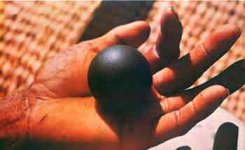
On another note, more related to this thread, has anyone ever read the book Great Books of Hashish? I read vol 1 which was published in the late '70's, and I think there is also a vol 2 that was published later, but I have not read that one. The author travels the world documenting, with photos, the different ways people make hash. There are some great pictures, and some pretty sweet techniques. I will, someday, make a Nepalese temple ball like the ones in that book.
 
Hi again,

I feel somewhat foolish for posting the questions above, since I just found out for myself after a few hours of reading and I learned a lot.

For anyone interested, this was where I found the real lowdown:
http://books.google.com/books?id=1-...=X&oi=book_result&ct=result&resnum=3#PPA14,M1

Or at least that is the link I had, it was a google book entitled Bioactive Heterocycles IV of all things.

Basically, Admini was spot on, and CBG is the one and only cannabinoid precursor. Although, "THCA-Synthase is the enzyme responsible for the production" is factually correct, too, because delta-9-THC is actually not found in the live plant, it is the decarboxylated version of THCA which is in the plant, and that is derived from THCA-synthase.

There is alot more great information in that book for anyone scientifically minded.

And I attached an image from that book I talked about above of a finished temple ball, the real deal.
 

Attachments

  • Nepalesetempleball.jpg
    Nepalesetempleball.jpg
    6.4 KB · Views: 12
Last edited:
well done BobbyDigital!
wanted to answer you the other day but kind of fell asleep while wanting to do so... ;)

some more insight on the THC issue - heat does the trick when you smoke, but also time would :

http://www.cannabis-med.org/english/faq/12-heating.htm

So essentially eating green plants without cooking them will not get you that high... just in case you had a wanna-be-a-cow attack ;)

That temple ball in your photo is very likely to have high CBD content, which is typical for hash produced in the Himalayas region.

l8r,
admini
 
Back
Top