Nordle

Uncle Jack

Well-known member
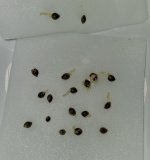
After sprouting only three seeds from this pack so far I have two females and had one male.
The male has been discarded.
The two females have been kept in clone form and one, Nordle (C) I call it is having an indoor/outdoor run that is winding up as I write.
These two both are beautiful plants.
One can really appreciate the quality of the genetics in these two.
Will provide more details in the coming weeks and months as this one especially Nordle (C) has become my new favourite.
(y)(y)
 
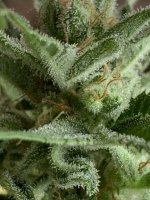
Some pictures of the trichome density on Nordle (C)
She has been grown in less than perfect conditions starting inside for beginning of flowering
then moved outside when overnight temps were as low as 3 - 4c at times.
Anyway just a few close ups as how she looks in the whole doesn't do her justice.

IMG_1690 - Copy.JPG


IMG_1691 - Copy.JPG
 
Some pictures of the trichome density on Nordle (C)
She has been grown in less than perfect conditions starting inside for beginning of flowering
then moved outside when overnight temps were as low as 3 - 4c at times.
Anyway just a few close ups as how she looks in the whole doesn't do her justice.

View attachment 91967


View attachment 91968
That is pretty Nice one !!!
 
@Jammy Git you may be better off to start flowering your plants a few weeks before plants start naturally flowering outdoors.
That way they get a headstart on the season.
Flowering starts here late January or early February depending on the strain.
I have seen a guy on this forum from England do this and he had good results in his courtyard.

A simple way to achieve this is to put vegging plants from outside that are in pots into a darkened room each night at the same time to make them think it is time to start flowering, then put them back outside once it is dark again. Once the hours of darkness are appropriate for flowering outdoors you can stop doing it and even plant them in the ground if you want. Another option is to place a cardboard box over them to shorten the daylength.
'
'It worked for him no reason it couldn't work for you to.

Just need to be hyper vigilant, not forget to do it and keep the time consistent with what it will be when you stop doing it so as not to shock the plants.
 
@Jammy Git you may be better off to start flowering your plants a few weeks before plants start naturally flowering outdoors.
That way they get a headstart on the season.
Flowering starts here late January or early February depending on the strain.
I have seen a guy on this forum from England do this and he had good results in his courtyard.

A simple way to achieve this is to put vegging plants from outside that are in pots into a darkened room each night at the same time to make them think it is time to start flowering, then put them back outside once it is dark again. Once the hours of darkness are appropriate for flowering outdoors you can stop doing it and even plant them in the ground if you want. Another option is to place a cardboard box over them to shorten the daylength.
'
'It worked for him no reason it couldn't work for you to.

Just need to be hyper vigilant, not forget to do it and keep the time consistent with what it will be when you stop doing it so as not to shock the plants.
Thanks for that info mate, I have heard of manipulating the near 18-19 hour summer days we get here, which has more chance of beating the damp 12 hour autumn days.
I did have a brainstorm of figuring out how long Early Queen or Early Skunk takes to mature, then try counting back the days after forcing them to flower.......to be honest, at the moment I've either got that option or automatics until I can get an LED setup ๐Ÿ‘โœŒ๏ธ
 
Something I have noticed about growing outdoors in my area is that if you can eliminate cats from your garden then the birds will return or breed up.
This year I have three or four fantails patrolling my garden.
They are doing a wonderful job of keeping the insects at bay.
Hardly any butterflies or cabbage moth compared to other years.
Over the past two years I have trapped two cats that were coming into my yard and sent them to the pound.
The bird life is going nuts, so it was worth the effort.
Just a thought for people that are plagued by caterpillars.
All the best.
 
Something I have noticed about growing outdoors in my area is that if you can eliminate cats from your garden then the birds will return or breed up.
This year I have three or four fantails patrolling my garden.
They are doing a wonderful job of keeping the insects at bay.
Hardly any butterflies or cabbage moth compared to other years.
Over the past two years I have trapped two cats that were coming into my yard and sent them to the pound.
The bird life is going nuts, so it was worth the effort.
Just a thought for people that are plagued by caterpillars.
All the best.
Mate, the birds in our garden have bird feeders everywhere with seed, fatballs, pellets, and mealworms, courtesy of my missus ๐Ÿ˜
They don't eat anything as lowly as insects and berries here.....apart from my strawberries every year ๐Ÿ˜†
๐Ÿ“๐Ÿค ๐Ÿ˜ฎ๐Ÿ‘โœŒ๏ธ
 
Mealworms are insects @Jammy Git
Albeit in a larval form.
Sounds like your birds are on the gravy train old mate.
If you don't have a problem with the butterfly in its larval form when growing the kind then you can scroll on mate.
Peace buddy
 
Last edited:
Back
Top